


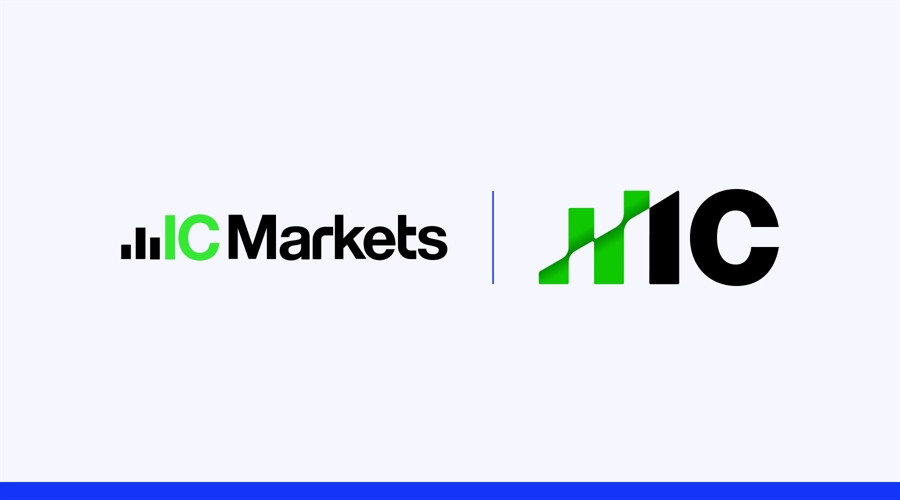
After two decades of expansion, IC evolved its identity to match the scale, regulatory footprint, and ambition of what it has actually become: a global, multi-entity financial services group, not a single forex broker. Behind the visual change sits a deeper process: consolidating the brand as an owned, licensable asset and rebuilding the infrastructure needed to run it at scale.
London’s trading industry is coming home!
Most companies change their brand when something is broken, to restore their reputation, or to exit a market. That wasn’t our situation.
IC evolved because the company simply outgrew the previous brand. The previous brand was built for a forex-first broker, competing for share in a single product category across a handful of core markets.
Two decades on, we operate across multiple regulated entities and jurisdictions, including entities regulated by ASIC and CySEC and operating within applicable MiFID II requirements. Our client base spans retail traders, institutional desks, and partners who transact in a dozen languages and scripts.
IC is entering its next chapter. At Money Expo Abu Dhabi 2026, we showcased a refreshed identity as we continue our transition to https://t.co/nSzpimBQQk, same IC, sharper focus on precision, performance and power built on nearly two decades of bridging retail and institutional trading.
IC was awarded Best Global Execution at the event. Recognition like this doesn’t come from one moment, it comes from the work the team puts in every day for the traders who trust IC.
Thank you Abu Dhabi. Until next time.
Read more: https://t.co/XTa42i6IhT
*** Trading in securities involves significant risk. Prices may fluctuate and securities may become valueless. Losses may exceed deposits. These products are complex and require appropriate knowledge.
#MoneyExpoAbuDhabi #IC #Trading
— IC (Formerly IC Markets) (@ic_com_official) July 11, 2026
Why Now, and Why This Way
Three structural shifts made this evolution necessary rather than optional.
1. Brand architecture had outgrown a single, descriptive name.
The previous name tied the identity to one product line: markets, trading, CFDs. But the business has diversified well beyond that. A name that describes a product category becomes a ceiling once the company expands beyond it. Moving to IC, a masterbrand rather than a descriptor, gives us room to grow into adjacent products and services without requiring another potential identity change five years from now.
2. A masterbrand needs to sit above the legal entity structure, not inside it.
Operating across ASIC, CySEC, and MiFID II jurisdictions means operating through multiple regulated legal entities, each with its own licensing conditions and obligations. When the client-facing brand is too tightly fused with one entity’s name, every regulatory or structural change downstream becomes a brand problem.
Separating IC as the client-facing identity from the specific entity names beneath it gives us structural flexibility as licences, entities, and jurisdictions evolve, without ever asking clients to relearn who we are.
Read more: How to Lose “Markets” in Ten Months
3. Global growth exposed linguistic complications.
The previous name was a compound English word, awkward to localise, transliterate, and pronounce consistently across non-Latin scripts. As our footprint extends into markets where partner and client communication happens in Arabic, Mandarin, and Cyrillic-script languages, that friction adds up.
IC has two letters. It displays well in multiple languages and is culturally agnostic in a way the old name structurally couldn’t be.
Owning the Address, Not Just the Name
A brand evolution on this scale is only as strong as the address people are actually sent to, and that is where acquiring ic.com mattered as much as the new mark itself. A two-letter dot-com domain is among the scarcest forms of “real estate” on the internet. Most were claimed decades ago and rarely change hands. Securing it was a prerequisite for the evolution to function properly.
Before this, our web presence was split across multiple entity-specific and country-specific domains, each carrying its own search history, backlink profile, and organic authority, none of which compounded into a single asset to boost its overall value. Consolidating onto one domain concentrates years of accumulated brand equity and online authority in one place instead of dividing them.
It also closes a standing exposure: an unclaimed or third-party-held ic.com would have been a permanent phishing and impersonation risk, as well as a route for confused traffic to end up somewhere we don’t control.
Masterbrand as a Licensed Asset, Not a Marketing Cost
Going forward, IC as a trademark and brand asset sits at the group level, and each regulated operating entity uses it under a formal intercompany licensing arrangement rather than owning it outright.
This provides a practical structure for a multi-jurisdictional regulated group. It keeps the brand insulated from entity-specific regulatory events. It means an entity can be added, restructured, or wound down without threatening the identity clients recognise.
Treating the brand this way also changes what it represents on the balance sheet, conceptually if not always literally. It can be managed as a licensable strategic asset rather than simply as a marketing cost. That opens options: future joint ventures, partner or franchise-style arrangements, or white-label products that use the IC identity under licence without diluting ownership.
It also simplifies future acquisitions considerably. Bringing a new entity or licence into the group no longer means reconciling two brand histories, because the new operation is simply licensed to use the brand that already exists.
What Brand Consolidation Buys Us Commercially
Folding regional and sub-brand variants into a single name has direct commercial effects. Paid search and social campaigns stop competing against our own brand terms across regions, which can improve campaign efficiency and, over time, help reduce the cost of media we already buy.
Partners and introducing brokers promote one recognisable name instead of negotiating country-by-country brand permissions, which shortens onboarding and reduces friction in every new market.
Cross-selling between products, including multi-asset trading, institutional services, and wealth services, also becomes more credible than before because clients now encounter one group rather than what looked like unrelated businesses sharing an office.
The Insight Behind the F1 Soft Launch
The most deliberate move in this evolution was the sequencing. Most identity transitions are announced. We tested ours first.
The TGR Haas F1 Team partnership gave us a controlled, high-visibility environment to expose the new identity to a global audience before a single client-facing asset changed. Abu Dhabi 2025 functioned as a live pilot.
We could observe recognition and reaction on one of the world’s most-watched motorsport stages without requiring a separate brand-launch campaign of the same kind, before committing to full deployment. We used an asset we already owned to test a decision most companies make on faith.
Preserving the Equity That Mattered
The hardest constraint on any brand evolution for a two-decade-old, trust-dependent business is this: you cannot afford to look like you’ve become someone else. Break the visual continuity too sharply, and you don’t look modern; you look unfamiliar, and unfamiliar reads as risk.
That’s why IC was extracted rather than invented. It’s the root that was always inside the previous name, carried forward intact rather than replaced.
Rebuilding the Infrastructure Behind the Brand
The evolution created the occasion, but the systems underneath had to keep pace. For years, client and prospect data sat in disconnected regional and entity-level systems, a natural side effect of operating under fragmented brands and domains. Consolidating into one identity gave us the opportunity to unify that data into a single Customer Data Platform, with one client record instead of several partial ones.
That unification also finally made proper multi-touch attribution possible. Previously, fragmented domains and inconsistent brand tagging distorted the tracking of a client’s path across paid media, organic search, partner referrals, and direct traffic, so attribution models worked with incomplete and often contradictory data.
A single domain and a single data schema remove most of that distortion, which means marketing spend can now be measured and allocated with far more precision than before.
On the client-facing side, this is paired with continued investment in AI, applied to streamline onboarding and verification and deliver more relevant market insights and content, as well as faster support.
Execution as a Test of the Operating Model
A change like this doesn’t stay inside marketing. It touches legal entity documentation, regulatory disclosures, compliance-approved client communications, partner-facing materials, platform UI, and physical assets across every regulated jurisdiction in which we operate.
It required coordinating thousands of employees in international offices, each bound by different regulatory sign-off requirements. The rollout was a live stress test of how well the organisation can execute a cross-jurisdictional change while meeting different regulatory and compliance requirements.
What This Positions Us For
This was infrastructure work in the fullest sense: an owned domain, a centrally governed and licensable brand, unified data, and a modernised technology stack, all built to hold multiple product lines, multiple regulated entities, and multiple markets without buckling under any of them. Early client and partner sentiment has been strongly positive, though it’s still early for statistically meaningful data.
This article was written by Tony Philip at www.financemagnates.com.Retail FXRead More
You might also be interested in reading NGS raises 2025 adjusted EBITDA outlook to $76M–$80M while expanding capital returns and market share.