


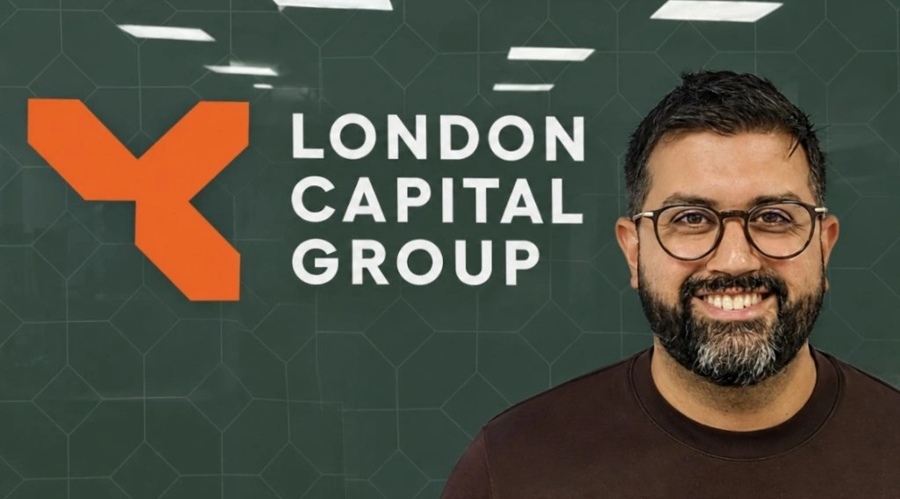
“We’ve been trying to buy the company from the day that we came in,” says Matt Basi, managing director of London Capital Group (LCG), summing up a deal that took the better part of three years to close.
The deal is LCG’s management buyout: Basi and his co-director Dave Worsfold have taken full ownership of the FCA-regulated broker through their holding company, MBDW Holdings, ending its ownership by the estate of the collapsed Swiss neobank FlowBank. It closes out an unusual chapter for one of the UK’s oldest CFD brands.
LCG was delisted from the London Stock Exchange in 2018, taken private by then-CEO Charles-Henri Sabet, and folded into his newly launched Swiss venture FlowBank in 2020. When FlowBank was forced into bankruptcy by Swiss regulator FINMA in June 2024, LCG’s UK unit was left to prove it could survive on its own, and Basi and Worsfold, who had been running the company since early 2023, ended up as its buyers.
Basi spoke to Finance Magnates about how that deal came together, why LCG has restructured itself into a lean introducing broker rather than a full-service CFD provider, and what he thinks it will take for the business to turn a proper profit.
A Buyout That Only Became Possible Through Bankruptcy
Basi said the plan to buy LCG predates FlowBank’s collapse by years. He and Worsfold joined as interim directors in late 2022 at Sabet’s invitation, with a management buyout in mind from the outset. They quickly set about repositioning the business away from holding client money and running its own dealing desk toward a pure introducing broker model.
The duo pitched the plan to both the FCA and Sabet in 2023, but could not agree on a price. “We could never frankly agree on a sensible price for the management buyout, because FlowBank had an expectation of the value of LCG. Ours was different,” Basi said. “We were at a bit of a stalemate.”
That stalemate broke only when FlowBank itself was forced into bankruptcy in June 2024, leaving LCG to prove to the FCA it could survive as a standalone, ring-fenced business. Once that was established, FlowBank’s Geneva-based liquidators agreed to let Basi and Worsfold keep running LCG toward a buyout, but were bound by Swiss law to test the price first.
The result, in Basi’s words, was “a bit of a beauty parade process in Switzerland,” with creditors and outside investors invited to bid before MBDW Holdings’ offer came out on top.
He declined to disclose the purchase price but described how the deal was structured. “We’ve paid an initial amount in cash, myself and Dave, out of pocket, through our holding company MBDW,” he said. “And then there’s an additional obligation, which is that we will pay them that they have first call on the first x amount of profit we make over the course of the next 24 months, and those two numbers in combination amounted to the best bid that they received for the company.”
An intercompany balance of roughly £200,000 that LCG owed FlowBank at the point of its collapse was also settled on completion.
“Everyone in the Room Has Been in Financial Markets for at Least 25 Years”
The business that emerged from that process bears little resemblance to the LCG of a decade ago. The firm now employs 11 people in total. “We have one dedicated person in compliance reporting to Dave, and then there’s myself as the sort of commercial lead,” Basi said. The remaining eight are split across sales, sales trading and execution, including two staff whose job is increasingly about API integration rather than manual dealing, as more clients ask to connect directly to pricing rather than trade through a front end.
Phone-based dealing is now a niche within a niche. “As a percentage of trades, it would be significantly less than 5%,” Basi said, though he noted that even electronic clients often want to talk markets with LCG’s team. “Everyone in the room has been in financial markets for at least 25 years,” he said, name-checking tenures across the desk that range from 25 to 30 years, with the firm’s FX specialist recently turning 60.
Almost all of that flow is now cleared through IG Group, with a smaller and less consistent line running through Capital.com.
Basi resisted the idea that LCG operates as IG’s exclusive introducing broker in any formal sense, but did not dispute the practical reality. “Operationally, we are virtually exclusive with IG,” he said, but “we would also have a line in with at least one or two other brokers because not everyone wants to trade with IG.”
Clients, he stressed, are legally IG’s rather than LCG’s, but the relationship sits entirely with his team. “IG don’t talk to our clients. The reason IG pays us is that we look after that side of the service, and therefore the stickiness in terms of the relationship is with us.”
That arrangement carries obvious dependency risk if IG were ever to change its commercial terms or its appetite for introducing broker business, a point Basi acknowledged directly. “That’s one of the key risk points, which is that we’ve got dependency risk against a primary relationship,” he said, but argued any such shift would be slow rather than sudden, given how embedded the relationship is on both sides. “They couldn’t turn the lights off on us tomorrow. Equally, we couldn’t drag our book out of them tomorrow.”
“You Won’t Find Us Paying for Ad Space on Google”
LCG’s client acquisition strategy is deliberately narrow and, by Basi’s account, entirely organic. “You won’t find us paying for ad space on Google or competing to be the top of any AI search,” he said. “The actual lead generation and the sales and the onboarding are through only two routes: either the sales team originating new clients from their network, or from referrals from existing clients.”
He put the target client profile at initial deposits of between £10,000 and £1 million, describing a mix of legacy retail accounts inherited from the FlowBank era alongside a growing book of higher-value clients brought in by LCG’s own sales staff, many of whom previously worked at IG, CMC Markets or ADSS.
LCG currently has roughly 1,000 accounts, of which about 500 are active in a given month, against what Basi estimates is the office capacity for around 2,000 active accounts before the firm would need to add headcount. “I would expect that over the course of the next 18 months we would see the active client numbers in any given month growing to two and a half thousand,” he said, describing referral-driven growth as a compounding effect. “You start out with a hundred clients and build relationships from there, but actually the more clients you add, the more that exponentially grows out via referral and introduction.”
Asked to clarify LCG’s pitch to traders weighing a direct account with IG against one introduced through LCG, Basi pointed to experience and cost neutrality together. “There are two things, really. The first is that we offer a layer of service that I don’t think is available anywhere else in the market,” he said, but added that the model only works because clients pay nothing extra for it.
“Our clients pay exactly the same as they would if they were approaching IG directly, and then IG pay us out of those standard costs.” He argued that charging a premium for access to LCG’s sales team would not attract enough clients to justify it. “It’s kind of a best of both worlds solution for them. They get IG’s technology, security of funds, massive balance sheet, immediate execution, huge range of markets, but for the same price that they would pay for all of those things anyway.”
“The Account Opening Pipeline Is Stronger Than It Has Been in Six Months”
The growth has not yet translated into a smooth financial picture. LCG’s UK unit returned to profitability in 2024, helped by legacy payments still flowing through from the old FlowBank-era clearing arrangement. Basi said that the combination flattered the numbers.
“2024 was our first full year operating under the IB model, but we also had some legacy payments coming into the company for flows done under the previous model,” he said. “Those two payments from IG and FlowBank effectively combined to create an artificially high P&L.”
With those FlowBank payments gone entirely in 2025, and legacy costs from winding down the old model still being absorbed, Basi said a loss for the year was close to unavoidable. “The revenue from the IB business continues to accrue,” he said, arguing the underlying trend is the important number rather than the headline drop. He expects 2026 to be roughly breakeven, with a return to growth already visible.
“Like the rest of the industry, August volumes are horrendous. No one wants to trade when they’re sitting on a beach eating ice cream,” he said, “but early signs already in September are that volumes are back, and certainly the account opening pipeline is stronger than it has been in six months.”
He is pencilling in 2027 as the year LCG becomes properly profitable under its new ownership structure.
“I’d Be Surprised If That’s a Route That We Go Down”
On whether LCG might one day rebuild its own dealing desk and go back to holding client money, Basi was blunt. “I’d be very, very surprised if that’s a route that we go down,” he said, estimating that reverting to a full-service clearing broker would push annual operating costs from roughly £1.2 million to £1.5 million today up to somewhere between £5 million and £10 million, once technology, compliance and market data are added back in.
“It’s a very straightforward cash business”, as things stand, he said. “We get paid by IG for the clients that we introduce. Some of that money goes to rent, some of it goes to staff salaries, some of it goes to HMRC, and a small portion of it goes to Bloomberg. And then whatever’s left at the end of the month is our profit.”
He was similarly cautious about the wider prospects for new entrants to the UK CFD market. “It’s very overbroked, it’s well established,” Basi said, pointing to the cost of compliance and technology and to the marketing budgets of larger rivals.
“If you’re LCG and someone approaches you and says, ‘Here’s twenty-five million quid market budget, let’s go back to full service’, you’re not scratching the surface. You spend that inside twelve months.”
In his view, further consolidation among UK brokers is likely, even if the market itself is not shrinking. “I think it’s well established that the UK is a financial hub. It’s a market well worth servicing, but you have to find a niche that allows you to service it in a way that meets the demand.”
Basi floated the Middle East as the most plausible next market for LCG’s relationship-led model, drawing on his own background running regional relationships for CMC Markets. “I think this model would work very well in other parts of the world, and there’s certainly in the Middle East where high-value clients really value that white-glove, hands-on service,” he said.
“I definitely wouldn’t rule out the possibility that we would look at geographical expansion, but in terms of regulatory expansion and re-adding our previous permissions, I would be shocked if that was something that hit the five-year road map.”
This article was written by Arnab Shome, Adonis Adoni at www.financemagnates.com.ExecutivesRead More
You might also be interested in reading ECB Chief: Cryptocurrencies Are ‘Certainly’ Being Used to Circumvent Russian Sanctions.