


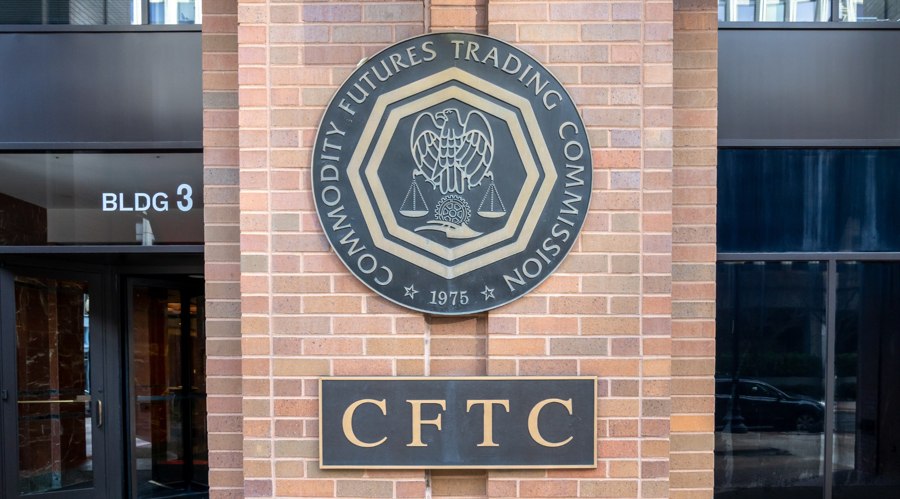
Bets on what a named person will say may be presumed open to manipulation, staff at the Commodity Futures Trading Commission (CFTC) said yesterday (Tuesday). Their advisory covers so-called mention markets.
Those contracts also settle on whether someone attends an event or interacts with another person. The staff letter does not ban them but asks exchanges for a “heightened showing” in any filing to list them, with surveillance built around the people who control the outcome.
London’s trading industry is coming home!
The category is small. Mention contracts on Kalshi, one of the few US-regulated venues that lists them, traded about $3.3 million in July, according to Dune Analytics data cited by CNBC. Sports make up more than 80% of the exchange’s weekly trading volume, by NPR’s count.
Two Settlements Came First
On August 28, the CFTC ordered former White House teleprompter operator Gabriel Perez to pay $172,539.02. The agency found he used advance access to presidential speeches to trade mention contracts on Kalshi between December 2025 and February 2026.
The total combines $107,539.02 in disgorgement and a $65,000 civil penalty. Perez also received a three-year trading ban.
A month earlier, the agency settled with former Representative George Santos over trading in a Kalshi contract on whether he would attend the State of the Union. He did not admit wrongdoing.
Kalshi said its internal surveillance flagged the Perez trades and that it reported them to federal authorities, NPR reported.
Settlement Rests on One Person’s Conduct
Most event contracts listed on designated contract markets (DCMs) settle on outcomes no single person controls, the letter said. Economic data, election results and regulated sports are its examples.
Mention markets turn on the conduct of one named person. Staff said that conduct may be neither independently generated nor externally verifiable.
The letter cites the CFTC’s June proposal, which would treat player-injury and discrete-action sports contracts as likely contrary to the public interest. That proposal said such contracts can be controlled by a small number of people.
The letter’s example is a podcast host with a catchphrase. The host can say it at will, and a trader can prompt it by sending in a question or paying for an on-air shout-out.
People close to a speaker may also hold scripts, prepared remarks or guest lists, which staff described as material nonpublic information. Staff also flagged “an unrelated buzzword recited during an earnings call,” which may draw little scrutiny.
Coinbase CEO Brian Armstrong made the point on an earnings call late last year, according to CNBC.
“I just want to add here the words bitcoin, ethereum, blockchain, staking and Web3,” Armstrong said on the call.
Four Tests for a Listing Filing
Staff said a well-designed contract, combined with exchange rules and surveillance, may rebut the presumption “in limited circumstances.” Exchanges are asked to weigh four factors.
The first is whether the speaker faces legal, professional, fiduciary or contractual duties that deter gaming the result. The second is whether others can pressure or induce that person.
The third is whether the words or actions are independently verifiable and draw substantial public scrutiny. Remarks in private settings, or by people outside public life, are unlikely to qualify, staff said. The fourth is the exchange’s own trading rules, surveillance and controls.
Staff want exchanges to identify likely insiders from financial disclosures for public officials, or from exchange filings for corporate officers. Position limits and reporting should then be sized to those people.
The CFTC’s enforcement division covered similar ground in February, when it issued an advisory on the misuse of nonpublic information after Kalshi sanctioned two traders.
A footnote suggests restricted lists of connected traders, pop-up confirmations before trading and monitoring of trades placed shortly before event information becomes public.
The advisory creates no new obligations and “does not necessarily represent the views of the Commission,” according to the letter. Duncan Hennes, acting director of the Division of Market Oversight, signed it.
Kalshi had disputed the premise. In a July comment letter, Arjun Sawai, its head of market operations, called the idea that the contracts create new manipulation incentives “on close inspection, overstated.”
Kalshi Pulled Sports Word Bets in August
Kalshi removed its sports mention markets in August after the CFTC opened an internal review, NPR reported at the time. Contracts on political events, earnings calls and live newscasts stayed up.
“We’ve addressed this guidance based on a prior discussion with the CFTC,” Kalshi spokesperson Elisabeth Diana said in a statement to CNBC.
Polymarket, Kalshi’s main rival, lists mention markets only on its offshore platform, outside CFTC oversight.
Kalshi’s pending request to offer risk-based margin to institutional traders excludes sports contracts and limits eligibility to events with objectively verifiable outcomes.
This article was written by Damian Chmiel at www.financemagnates.com.RegulationRead More
You might also be interested in reading Europe’s Coinbase users frustrated as MiCA forces sunset of USDC yield.