


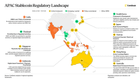
APAC’s stablecoin market is best understood as a multi-layer infrastructure stack rather than a single-token market. Issuers create and manage stablecoins, but exchanges, custodians, payment firms, treasury platforms, and capital-market infrastructure determine how they are accessed, distributed, and used in real-world workflows. This distinction matters because current usage remains largely liquidity-led, while the next phase of adoption is likely to depend increasingly on regulated market infrastructure and institutional connectivity.
At the issuer layer, global USD stablecoins remain central to APAC activity. USDT dominates crypto-native liquidity across many Asian markets, supported by deep exchange penetration and broad on-chain distribution. USDC, RLUSD, and Paxos-issued stablecoins represent the more compliance-focused segment of the USD stablecoin market and are better aligned with regulated institutional use cases such as payments, treasury, and tokenized-market settlement.
submitted by /u/semanticweb [link] [comments]
r/CryptoCurrencyRead More
You might also be interested in reading ‘WallStreetBets’ Themed Tokens Plummets 90% as Insider Dumps Treasury Holdings.