


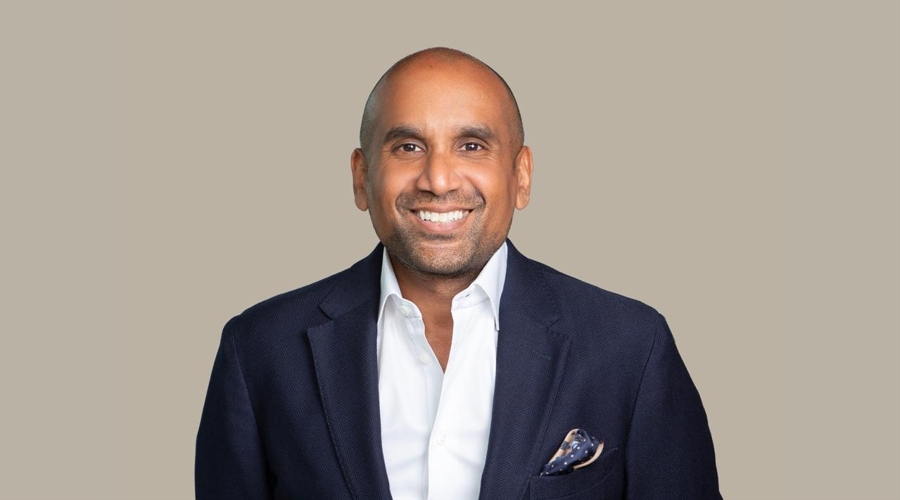
In a far-reaching interview, OpenPayd’s Chief Commercial Officer Lux Thiagarajah discusses his transition from traditional foreign exchange trading to the world of digital finance, and outlined his company’s ambitious plans for global expansion. With a background rooted in financial risk management, Thiagarajah is now shaping OpenPayd’s commercial evolution as it builds out the infrastructure layer to bridge fiat with blockchain rails.
He discussed the biggest challenges hindering blockchain’s institutional progress, including privacy concerns and the still highly fragmented state of global regulations, but also reiterated his belief that stablecoins will overcome these issues and revolutionize cross-border B2B settlements in the future.
1. You have a lot of experience in TradFi, where you spent the formative years of your career. What is it about crypto that interests you and compels you to forge a new path in digital finance?
I was first drawn to crypto for its speculative nature about 14 years ago. Having sat on an FX trading desk, seeing an asset as volatile as crypto was too good to miss. It was only after I went down the rabbit hole that I started to form the view that the technology underpinning it could fundamentally change the future of how money moves.
Having seen firsthand the struggles of cross-border money movement, it felt obvious to me this was the solution. Faster, more transparent, and without many of the intermediaries that add time and complexity to traditional cross-border payments.
From there, the question became less about whether the technology was interesting and more about when it would reach meaningful adoption, and whether I wanted to be part of that journey. In hindsight, I probably would have made the leap earlier. I’m very glad I eventually did, and I haven’t looked back since.
2. You’re known for helping businesses accelerate and scale, and that seems to be one of the reasons OpenPayd brought you on board. What does the next stage of development look like for OpenPayd and its commercial strategy?
In short, more of everything.
We are focused on expanding the number of verticals we serve. Our four largest today are financial institutions, digital assets, CFD and FX brokers, and iGaming. But the growing role of stablecoins in money movement is opening up a much broader range of businesses that can benefit from the infrastructure we provide.
We are already well established in the UK and Europe, supported by our licensing footprint, but securing additional licences allows us to expand what we can offer and where we can offer it. We recently announced the acquisition of 43 US state Money Transmitter Licences (MTLs) and are focused on the move into the US, which is an important addition to that footprint, and we harbour ambitions to grow our licensing footprint even further.
Unsurprisingly, both I and OpenPayd are fully backing the role stablecoins can play in cross-border payments. We will continue developing our offering so that we can truly bridge traditional fiat and blockchain-based rails.
Ultimately, with a broader licensing footprint and the infrastructure to connect multiple rails, we want to make cross-border money movement as fast, efficient, and cost-effective as possible. That’s the strategy.
3. As OpenPayd’s CCO, you’re going to spend a lot of time on strategic partnerships. How do you plan to evaluate potential partners and ensure they advance OpenPayd’s goal of becoming the universal infrastructure for the digital economy?
In my mind, a good partner for OpenPayd needs a few things. Firstly, a good cultural fit. That’s imperative. We need to be able to work together well and harmoniously. Secondly, strategic alignment. Do we share similar long-term goals and a desire for mutual growth? Do they have a role to play in solving the same problems that OpenPayd is interested in fixing?
Thirdly, stability. OpenPayd has been profitable and cashflow positive for years, and we have a track record of delivering on our commitments. We need partners that we can rely on to do the same. Finally, risk appetite. Our licences and banking relationships sit at the core of what we do, so we need to work with partners whose approach to risk profile is aligned with ours. If those four things are there, you have the foundations for a relationship that can create real long-term value for both sides.
4. Coming from TradFi, you’re no doubt familiar with the reasons why some financial institutions are wary of dealing with crypto-native companies. Why is this still an issue, and how is OpenPayd going to fix it?
You can answer this question in two ways.
In general, why is TradFi still reluctant to embrace digital assets? For me, fragmented regulation is a big part of the issue. While the GENIUS Act and MiCA help set parameters, there still isn’t a unified approach globally. The UK, for example, has moved more slowly than some of its counterparts. That uncertainty will keep a lot of TradFi firms on the sidelines for now.
The other way to interpret it is why banks are still not rushing to support digital assets. Part of the answer is definitely the above. Traditional banks have spent decades building robust KYC around financial flows where they understand the parties involved. Where blockchain is involved, and transactions are moving through crypto wallets, you introduce a different set of considerations around counterparties, transaction monitoring, and source of funds. It alters systems and processes that traditional banks have relied on for decades.
Where OpenPayd comes in is really one and the same. We are the universal infrastructure layer that sits across multiple banking partners and bridges traditional fiat and blockchain-based rails. We have a robust regulatory and compliance framework that enables us to qualify the right clients and manage that activity appropriately. That enables us to fill a gap that many traditional financial institutions are still cautious to entertain.
5. You’ve talked about the convergence of TradFi and crypto before, but they’re still seen as separate things. Do you think that will be the case in 10 years? Why or why not?
I’m torn between my heart and my head on this. My heart wants to say no, because my personal view for a while has been that crypto and stablecoins should become mainstream and widely adopted.
My CCO head hopes yes, because it would mean traditional financial institutions are still reluctant to participate, and OpenPayd remains one of a handful of firms people trust to solve this problem.
The reality is that we are focused on our users not having to think about them separately. Our clients want to move money from Point A to Point B, and we perform the actions in the background across fiat and blockchain rails to execute that as quickly and cost-effectively as possible. They don’t need to think about TradFi versus crypto. We take care of that.
6. You began life as an FX trader before moving up into higher-level fintech roles. How does this background, perhaps your lingering macro trader mindset, and your experience with managing risk and volatility, inform the way you approach the convergence of TradFi with crypto?
It’s the age-old question of short-term versus long-term risk and reward. For myself and OpenPayd, it’s a little of both. What do we need to move on quickly to enable our clients to capture opportunities, protect market share, and increase revenue, versus what should be the long-term play to ensure we are keeping up with market dynamics?
A simple example was when we launched our digital offering. The short-term play was enabling on and off-ramping for clients so that we could meet an immediate need and increase volumes and revenue. In parallel, we were building out the product for where we believed the market was heading, enabling our clients to have master wallets, issue sub-wallets, and make bulk payouts in stablecoins.
That balance between what you need to act on now and where you think the market is going next is probably the trader mindset that has stayed with me.
7. Institutions are increasingly embracing stablecoins for B2B payments and settlements. But will these assets ever replace networks like SWIFT for the average global enterprise? Or what role are they going to play in the future of the financial economy?
Well, SWIFT’s own blockchain-based ledger tells you something about the direction of travel.
I think domestic rails are safe because I don’t see a future where everyone is transacting in stablecoins at the point of sale. There will still need to be some form of on- or off-ramp between fiat and stablecoins.
You also have domestic rails that already work incredibly well. With SEPA Instant now effectively unlimited and Pix working so well in Brazil, reliable domestic rails will continue to be of paramount importance.
Where I think stablecoins have a huge role to play is as a settlement rail, particularly for cross-border money movement. So I don’t see this as stablecoins replacing SWIFT or traditional payment rails altogether. The future is much more likely to be the two working alongside each other, with the infrastructure in the middle determining the most efficient way to move the money.
8. Most financial institutions are still at the exploration stage with blockchain. What major breakthroughs are required for those enterprises to start adopting digital assets en masse?
Firstly, there needs to be a standardised regulatory framework. It is still far too fragmented. Digital assets can be treated as securities in one jurisdiction and commodities in another, which makes the deployment of capital and clearing across markets difficult.
Secondly, there is still a lack of interoperability between legacy banking architecture, such as SWIFT, and blockchain-based rails. If institutions are going to adopt digital assets at scale, those two worlds need to be able to work together much more seamlessly.
Thirdly, blockchain is currently TOO transparent. Banks are not going to want the market or the public to have real-time visibility over transaction volumes, balances or counterparty relationships. We need to find a way to retain the transparency that makes blockchain valuable, while providing the level of privacy that financial institutions require.
Bridging TradFi and Crypto for the Future of Payments
Thiagarajah makes a very compelling argument that the convergence of TradFi and blockchain technology is almost inevitable. No longer just some theoretical concept, it provides a robust blueprint for the future of rapid, lower-cost global payments without intermediaries, and it’s getting harder for traditional institutions and enterprises alike to ignore.
The more that regulatory frameworks mature and crypto is legitimized in the eyes of governments, the hungrier enterprises will become for faster, more cost-effective cross-border payment rails. As that happens, OpenPayd can fill a crucial infrastructure gap between digital assets and the fiat ecosystem, paving the way for a future where crypto doesn’t replace traditional rails, but instead becomes more tightly integrated with them.
This article was written by FM Contributors at www.financemagnates.com.Thought LeadershipRead More
You might also be interested in reading Analyst Predicts Bitcoin Price Surge To $120,000 And Then A 50% Crash To $60,000, Here’s When.