


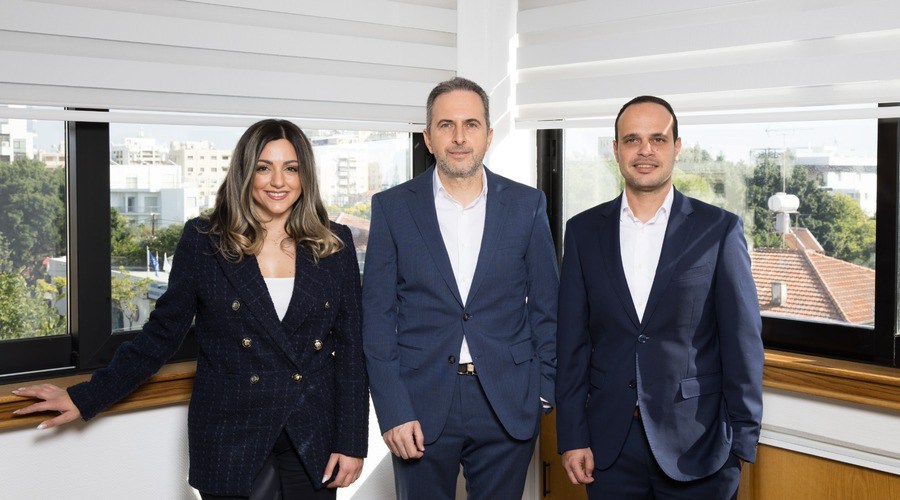
FiveComply has grown from its Cyprus headquarters into an international regulatory and compliance group with local operations in Cyprus, Dubai, Mauritius and Seychelles.
Today, the Group specialises in international financial services licensing, including Forex / CFD licensing, crypto licensing, Investment Firm licensing, VASP and CASP licensing, Payment Institution and EMI licensing, as well as corporate and group structuring and the establishment and ongoing operation of regulated businesses.
With more than 300 licences successfully obtained and over 250 entities under ongoing support, FiveComply has had a front-row view of how international licensing has evolved and how the expectations of both regulators and financial firms are changing.
Finance Magnates spoke with FiveComply about choosing the right jurisdiction for Forex, CFD and crypto businesses, the importance of local regulatory expertise, the Group’s expansion across regulated industries and why obtaining a licence is increasingly only the beginning of the regulatory journey.
FiveComply has supported more than 300 successful licences. How has international licensing changed in recent years?
The conversations we have with clients today are quite different from the ones we were having a few years ago.
Historically, a client might approach us and say, “We want a Seychelles Forex licence,” “We are looking at crypto licensing,” or “We want to establish in Mauritius.” The discussion would then immediately focus on the application.
Today, particularly with established financial groups, we tend to start much earlier.
Our first question is usually: What are you trying to build?
We need to understand where the clients will come from, what products will be offered — whether Forex, CFDs, crypto assets, payments or other financial products — whether the business will target retail, professional or institutional clients, how the group is structured, what banking and payment infrastructure will be needed, and where the business expects to be in three or five years.
Only after understanding those points can we properly discuss the jurisdiction.
Licensing has become much more strategic. Getting the approval is obviously critical, but the licence also needs to make commercial and operational sense once the company starts doing business.
When a client asks “Mauritius, Seychelles, Dubai or Europe?”, how do you determine the right jurisdiction?
There is no standard answer, and we think that is important for clients to understand. There is no jurisdiction that is automatically the “best” jurisdiction.
Seychelles may be appropriate for one business model, Mauritius for another, while Dubai or a European jurisdiction may make considerably more sense for another group. Each jurisdiction also has its own regulatory framework, including the FSA in Seychelles, the FSC in Mauritius and CySEC in Cyprus, as well as the relevant regulatory authorities in the UAE (CMA ex SCA).
We look at the complete picture: the proposed activities, target markets, products, client profile, group and ownership structure, available regulatory capital, banking requirements, substance requirements and long-term plans.
The nature of the regulated activity itself also plays a significant role. For example, an entity intending to offer copy trading services to clients in Asia may find a Seychelles Securities Dealer Licence, commonly considered in the context of Forex and CFD brokerage, more suitable, whereas an entity seeking to target European clients and offer both CFDs and cryptocurrency-related services may be better suited to a CySEC licence together with the appropriate crypto-asset CASP authorisation.
The considerations for an international Forex or CFD broker are not necessarily the same as those for an EMI or Payment Institution, while a VASP brings another set of regulatory, AML, governance and technology considerations.
For larger financial groups, the answer may also involve more than one jurisdiction, with different regulated entities serving different markets or carrying out different activities. In those situations, we need to understand how the entities fit together rather than looking at each licence in isolation.
FiveComply has established local operations in Cyprus, Dubai, Mauritius and Seychelles. Why is local presence so important?
Because financial services are global, but regulation is still very local.
You can read legislation from anywhere. Understanding how a regulatory environment works in practice is different.
That includes understanding local substance requirements, governance expectations, regulatory processes, the availability of qualified local professionals and what will actually be required from the business after approval.
This is why we have invested heavily in developing local teams.
Cyprus remains the headquarters of the Group and supports our cross-border, European and offshore regulatory work. In Seychelles, we have built a substantial local compliance and corporate team supporting regulated entities.
In Mauritius, we operate through AllServ Management Ltd, our licensed Management Company, with a local team providing corporate, administration, compliance and accounting support.
We also have our presence in Dubai supporting the UAE and wider MENA region.
Across the Group, this includes 20+ professionals in Mauritius, 15+ professionals in Seychelles, 3 professionals in Dubai and 20+ specialist professionals in Cyprus.
For us, having a local presence means we can remain involved throughout the process rather than simply referring the client elsewhere once the application reaches a certain stage.
FiveComply is well known for Forex / CFD licensing. How has the Group expanded into crypto licensing, payments and other regulated financial services?
Forex and investment services remain an important part of our business and an area where we have extensive experience.
But our clients have evolved and so have their regulatory requirements.
Today, our licensing work extends across Forex / CFD licensing, crypto licensing including VASP and CASP authorisations, Payment Institution and EMI licensing, Investment Funds, iGaming and other regulated sectors.
We are also seeing increasing crossover between these areas.
An established brokerage group may approach us initially for an additional Investment Firm or Securities Dealer licence. Later, the same group may want to explore virtual assets, payments or another regulated market.
That means our teams need to understand not only different jurisdictions but also different types of regulated activity.
This is becoming one of the most important aspects of international regulatory advisory. Clients increasingly need advisers who can understand the wider group rather than only one particular licence.
FiveComply recently supported a Mauritius Investment Dealer Licence application that received FSC approval only 12 days after submission. What made that possible?
This was a very positive outcome and a good example of why preparation matters.
Through AllServ Management Ltd, we supported a Mauritius Investment Dealer Licence application that received approval from the Financial Services Commission (FSC) of Mauritius only 12 days after submission.
We should be clear that this is not a standard FSC licensing timeframe and certainly not something that can be guaranteed. Every application is different, and the timing of an approval is ultimately determined by the regulator.
What the case demonstrates, however, is how important the work before submission can be.
A licence application is not simply a matter of completing forms and attaching policies.
The corporate and ownership structure, business plan, governance arrangements, directors and key officers, internal policies and procedures, compliance framework and proposed operations all need to fit together.
We spend considerable time ensuring that an application is coherent before it reaches the regulator.
Our aim is always to submit a file that clearly explains the proposed business, demonstrates how the regulatory requirements will be met and anticipates, as far as possible, the areas on which the regulator may require further clarification.
In this particular case, that preparation, together with the local support available through AllServ, contributed to a very efficient process.
You have more than 250 regulated entities under ongoing support. Why is that figure important to FiveComply?
Because it demonstrates that our relationships with clients do not necessarily end when the licence is issued.
We are, of course, proud to have successfully supported more than 300 licence applications, but equally important to us is the fact that we currently provide ongoing support to over 250 entities. For us, this reflects something beyond numbers: the long-term trust our clients continue to place in us, choosing to work with FiveComply not only during the licensing process, but for many years thereafter.
Obtaining regulatory approval is one milestone. Operating a regulated business successfully over several years is another challenge entirely.
Once the licence is granted, the commitments made during the application need to become operational reality.
The company has ongoing compliance and AML obligations, and these can differ significantly depending on whether the business operates in Forex and CFDs, crypto assets, payments or other regulated financial services.
Our wider Group has been structured to support those needs.
Depending on the jurisdiction and engagement, we can continue supporting clients with compliance and AML, corporate administration, banking and payment solutions, risk management, internal audit, regulatory reporting, legal and corporate advisory, training and other regulatory matters.
That ongoing relationship also makes us better licensing advisers because we see what happens after the licence.
We know the practical issues that regulated firms encounter once operational, and that experience feeds directly into how we approach new applications.
You often describe FiveComply’s approach to financial services licensing and regulatory compliance as “A to Z”. What does that mean in practice?
It means that, particularly in the jurisdictions where we have a local presence, we can be involved throughout the regulatory lifecycle.
Sometimes the relationship begins before the company even exists.
A client may come to us with a business plan and ask where it should establish its regulated operation.
We can assess the jurisdictions, discuss the appropriate corporate and group structure and identify the licensing and local substance requirements.
From there, we can assist with incorporation and establishment, the licensing and regulatory application process, regulatory business plan, policies and procedures, key appointments and communication with the regulator.
Once approval is received, the focus moves to activation and operational readiness.
After that, the relationship can continue through ongoing compliance, AML, corporate administration, risk, internal audit, regulatory reporting, training, banking and payment solutions and wider regulatory support.
For groups operating several regulated entities, the benefit is continuity.
We already understand the shareholders, management, business model and wider group when they come to us for the next jurisdiction or regulated activity.
That allows us to look at the regulatory strategy at group level rather than starting from zero with every application.
Finally, what should financial firms consider when choosing their next licence and regulatory jurisdiction in 2026–2027?
They should look beyond the headline cost and the advertised licensing timeframe.
Those things matter, of course, but they are only part of the decision.
We would encourage firms to ask: Where will our clients come from? Does this regulatory framework suit our products? What substance will we need? Can we find the right people locally? What are the banking and payment considerations? What will the entity cost to maintain properly? And how does it fit with the rest of our group?
We are seeing more sophisticated clients asking these questions before they decide on a jurisdiction, and we think that is a positive development.
After supporting more than 300 licences across Forex, CFDs, crypto, EMI and payment institutions and other regulated financial services, and working on an ongoing basis with over 250 entities, one thing has become very clear to us:
Getting the licence is a milestone. Building a regulated business that can operate successfully and remain compliant over the long term is the real objective.
That is why FiveComply has continued investing in both specialist expertise and local teams across Cyprus, Dubai, Mauritius and Seychelles.
As our clients become more international, our role is to be able to grow with them.
Meet FiveComply: Mauritius, Dubai and Hong Kong
FiveComply recently marked another milestone in its international growth with the official launch of the new offices of AllServ Management Ltd, FiveComply’s licensed Management Company in Mauritius.
The new offices represent more than an expansion of physical space. They reflect the growth of FiveComply’s local team, its expanding client portfolio and the Group’s continued investment in building a strong, hands-on presence in Mauritius. What began as a vision to establish meaningful local capabilities has developed into a dedicated team supporting an increasing number of clients across their regulatory, compliance, corporate, accounting and operational needs.
The Group’s international presence will also be on display at two major industry events this autumn.
On 22–23 September 2026, the FiveComply team will be at Forex Expo Dubai 2026 at the Dubai World Trade Centre, Booth 210, meeting clients, partners and financial services businesses considering new jurisdictions, international expansion or additional regulatory and compliance support.
The next stop will be Hong Kong for iFX EXPO Asia 2026 on 8–9 October, where FiveComply will welcome visitors at Booth 30 at the Hong Kong Convention and Exhibition Centre.
For businesses looking to establish in a new jurisdiction, expand their existing regulatory footprint or strengthen their compliance framework, Dubai and Hong Kong provide an opportunity to meet the FiveComply team in person and discuss their next stage of growth.
This article was written by FM Contributors at www.financemagnates.com.Thought LeadershipRead More
You might also be interested in reading Report: EU Represents Just 6% of Bitcoin Mining Hashrate, US Significantly Leads China.