


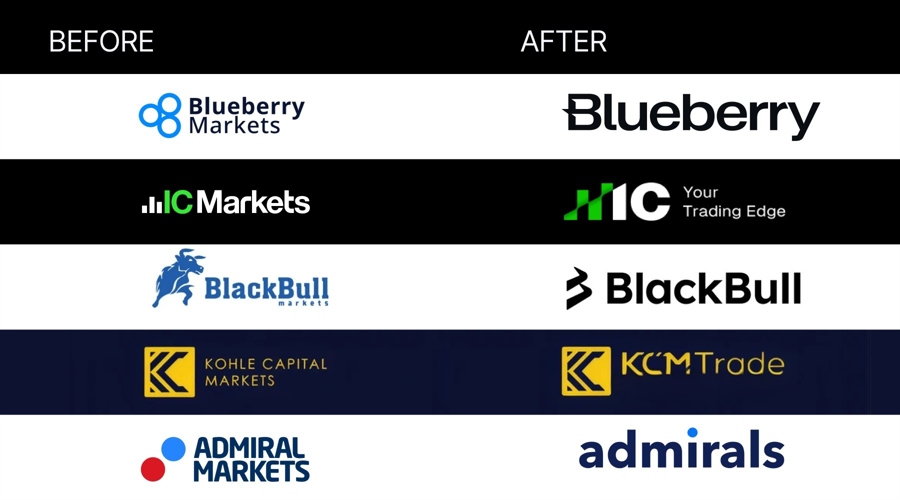
The retail trading industry saw further changes this week as brokers adjusted their brands, expanded into new asset classes and tested new infrastructure models. Several developments highlighted a broader shift away from traditional forex and CFD positioning, with firms increasingly moving towards wider financial platforms covering crypto, equities, payments and exchange-like services.
Rebranding remained a key theme, as brokers reviewed whether traditional naming conventions still fit businesses expanding beyond their original markets. At the same time, regulatory approvals enabled firms to launch new products, while technology and payment infrastructure continued to influence how brokers attract and retain clients.
Elsewhere, trading platforms faced operational challenges, while the growing role of digital assets pushed brokers closer to exchange-style models. The week’s developments reflected an industry adapting to changing client expectations and expanding beyond its traditional boundaries.
Retail Brokers Remove “Markets” From Brands
A growing number of retail brokers are removing the word “Markets” from their brands, with IC Markets becoming the latest firm to make the change. Blueberry, KCM Trade and Admirals have also dropped the suffix, while IG Group made a similar move in 2012.
Industry observers said the shift reflects a move towards shorter and more recognisable brands as brokers expand beyond forex and CFDs into areas such as crypto, prop trading and payments. However, firms including ThinkMarkets and easyMarkets have retained the naming structure.
Rebranding can require significant investment, involving legal approvals, technology changes and updates across multiple markets. Experts noted that a new identity alone does not replace factors such as execution quality and client service.
QRS Global Rebranded as Brex Capital
QRS Global, a CFD broker linked to an alleged forex trading scandal in Thailand, has been acquired and rebranded as Brex Capital. The new entity appointed Sophie Squillacioti as CEO and continues using the same trading infrastructure and client accounts, with existing users not required to register again.
Brex Capital remains registered in Comoros and holds a South African financial services provider licence using the same FSP number previously associated with another broker.
The rebrand follows a June investigation by Thailand’s Department of Special Investigation into QRS Global’s local operator, QRS Education Co Ltd. Authorities arrested the company’s CEO over allegations including fraud, unlicensed operations, false data and money laundering.
Revolut Drives Lithuania’s Rapid Growth in Cross-Border Investment Clients
Lithuania’s cross-border retail investment client base increased from around 500 in 2022 to more than 2.5 million by the end of 2024, according to ESMA data. The regulator attributed the growth to a single firm, identified by Finance Magnates as Revolut Securities Europe UAB.
The Lithuanian entity launched investment services in 2023 under a MiFID II licence and passports services across the European Economic Area. The growth followed the migration of more than 1.1 million EEA customers from Revolut’s UK investment entity.
Revolut Securities Europe reported more than €3 billion in assets under administration by the end of 2023, rising to €9.1 billion by the end of 2024. ESMA noted that reported client figures represent cross-border relationships rather than unique individuals.
Coinbase Expands UK Platform with US Stock Trading Launch
Coinbase has started rolling out US stock trading for eligible UK users, adding access to nearly 4,000 US equities through its existing app. The service offers zero-commission trades, fractional shares from £1 and extended trading availability five days a week. Users can fund purchases using GBP or USDC balances.
The launch follows the UK Financial Conduct Authority’s July 2026 authorisation allowing Coinbase to expand beyond crypto into areas including equities and derivatives. The company has also introduced savings and crypto-backed borrowing products in the UK over the past year.
Coinbase said the move forms part of its broader strategy to create an “Everything Exchange” combining crypto, stocks, derivatives and financial services. The company joins other platforms, including eToro, offering combined crypto and equity services to UK retail investors.
XTB Launches Spot Crypto Trading in Chile
XTB has launched spot cryptocurrency trading in Chile, offering 46 digital assets with plans to expand the selection. The service operates 24 hours a day, seven days a week, with a minimum transaction value of $2. Chilean clients previously accessed crypto exposure through CFDs and exchange-traded notes.
The launch follows XTB’s acquisition of a securities agent licence from Chile’s Financial Market Commission in February 2025. The company has also recently introduced an AI-powered analytical chat feature in the country, making Chile an early market for product launches.
CEO Omar Arnaout said XTB plans to expand spot crypto services into European markets. The broker launched similar services in Cyprus in 2026 and is expected to introduce the product in Spain before expanding further, subject to regulatory approvals.
Plus500 Adds CME Single Stock Futures to US Product Offering
Plus500 has added CME Group-listed single stock futures to its US offering, including micro-sized contracts aimed at retail traders. CME launched 77 contracts covering companies such as Nvidia, Tesla and Apple on 27 July.
The products are part of Plus500’s non-OTC business, which contributed around 15% of group revenue in the first half of 2026. Plus500 did not disclose the number of contracts available or trading terms, saying additions would depend on demand and market conditions.
The launch follows CME’s second attempt to build a US single stock futures market after the previous effort failed to gain traction. Plus500 reported first-half revenue of $462.9 million, up 12% year over year, while EBITDA reached $187.5 million.
Interactive Brokers Reports Login Issues During US Market Hours
Interactive Brokers users reported login and connectivity problems during US trading hours, with some traders unable to access the platform. Finance Magnates independently confirmed access issues during checks after reports emerged, although the overall scale of the disruption could not be determined.
Interactive Brokers is reportedly down for some traders right now. Are you one of them? #InteractiveBrokersDown #IBKRDown https://t.co/O4CwdkxdDD
— StatusIsDown (@status_is_down) August 5, 2026
The broker’s system status page continued to show all systems operational at the time, and no public outage notice had initially been issued. Later, an Interactive Brokers spokesperson said a technical issue affected “a fraction of a percent” of clients, specifically those with accounts hosted in certain APAC data centres.
The company said a login notice was posted within minutes and access was restored within an hour. The incident follows similar platform disruptions across the wider brokerage industry in recent years.
Australia Becomes Testing Ground for Broker Payment
Australia has become a testing market for global financial firms developing new payment solutions, supported by widespread adoption of digital payment infrastructure. The country’s population of around 28 million provides a smaller environment for firms to test products before broader expansion.
Real-time payment methods such as PayID and the New Payments Platform have gained adoption among consumers. Trading platforms including Pepperstone and Trade Nation have introduced real-time payments through Volt for Australian clients.
Volt data showed that nearly 73% of CFD account top-ups through the New Payments Platform occurred outside traditional banking hours, with 21% taking place during weekends. The data suggests traders value faster funding options and that payment improvements may influence customer behaviour beyond simply reducing transaction times.
Retail Brokers Move Closer to Exchange Models Through Crypto Expansion
Retail brokers are increasingly adopting operating models closer to digital asset exchanges as cryptocurrency services become a larger part of their businesses. Managing crypto exposure requires firms to handle specialist liquidity, custody, settlement and 24/7 market access, moving beyond the traditional broker role of connecting clients with liquidity providers.
Client expectations have expanded towards exchange-style services, including wallets, staking and tokenised products. The growth of tokenised real-world assets could further challenge traditional brokerage models by moving ownership records and settlements onto blockchain networks.
However, brokers are expected to retain roles in areas such as research, financing and regulatory support. As digital assets become more integrated into financial markets, the distinction between brokers and exchanges is becoming less defined.
This article was written by Tareq Sikder at www.financemagnates.com.Retail FXRead More
You might also be interested in reading KindlyMD Turns to Kraken as Fourth Provider for Bitcoin-Backed $210M Loan at 8%.