


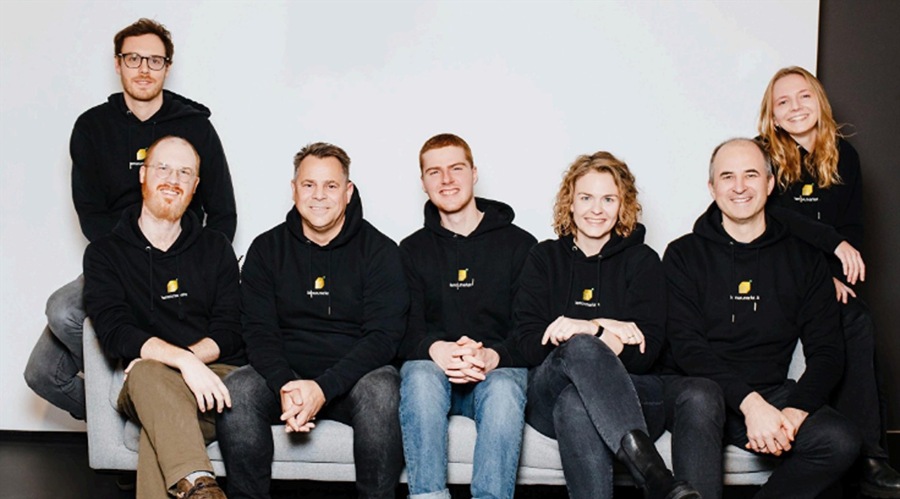
Hamburg-based sustainable banking app Tomorrow opened its in-house equity fund to new purchases on Wednesday, restoring a buy function that has been unavailable since the company moved its securities business to Berlin infrastructure provider lemon.markets in 2024. New customers can now open a securities account and buy into the fund for the first time, the two companies said.
The Tomorrow Fund (ISIN: DE000A2QK5D4) held €15.41 million in assets at the end of December 2025, according to fund data published by Das Investment. It launched in June 2021 and is classified as an Article 9 product under the EU’s Sustainable Finance Disclosure Regulation.
Annual costs run to roughly 1.5%, made up of 1.2% in management and operating fees and 0.3% in transaction costs. Tomorrow says the portfolio holds more than 70 listed companies, from bicycle component makers to wind turbine specialists.
Two Years From Migration to Buy Button
lemon.markets took over investment brokerage, trading and custody for Tomorrow in 2024, replacing an arrangement that ran through Solaris SE, Baader Bank and DonauCapital. Solaris continues to handle the banking side.
Tomorrow stopped securities account openings in its app on June 11, 2024, migrated existing custody accounts that August, and told customers investing would return in the fall. Holders could keep their shares through the switch but could not buy or sell.
Wednesday’s announcement does not address the gap between that timetable and the buy function arriving now. Tomorrow did not say how many of its customers hold the fund.
The Tomorrow Fund is “now open to everyone who wants to invest in line with their values,” Co-Founder and Co-CEO Inas Nureldin said.
[#highlighted-links#]
A €15 Million Fund Inside a €2.2 Trillion Custody Group
lemon.markets is no longer independent. Deutsche WertpapierService Bank completed its purchase of the firm on September 30, 2025, once BaFin cleared the deal, adding an API brokerage platform to a custodian holding €2.2 trillion in assets and processing securities transactions for about two thirds of German banks.
lemon.markets dates the tie-up to August 2025 in its own materials. The two businesses kept separate names and sales operations after the deal closed.
The Berlin firm has raised more than €28 million since 2020, including a €12 million round led by CommerzVentures. Its clients include Pleo, Holvi and Optio, and it has worked with BNP Paribas and Deutsche Bank on the brokerage-as-a-service product.
lemon.markets Founder and Chief Executive Max Linden described the platform as “a modular foundation that grows with partners like Tomorrow.”
German Infrastructure Rivals Chase Bigger Mandates
What separates lemon.markets from its closest domestic competitor is mostly the size of the client. Upvest, founded in Berlin in 2017, processed more than 100 million orders in 2025 against 20 million a year earlier, and serves Revolut, N26, bunq and Santander’s Openbank.
IG Group signed Upvest to run stock and ETF trading for French customers, and CMC Markets uses the same provider for multi-currency stocks and ETFs in Germany. Upvest raised $125 million at a €640 million valuation in a round led by Sapphire Ventures and Tencent.
Alpaca entered the market by buying UK provider WealthKernel and renaming it Alpaca Europe. Tomorrow, which says it has more than 100,000 customers and around 10,000 crowd investors, is a smaller account than the neobanks on Upvest’s roster.
Second Product Is an ETF Listed Since December
Tomorrow customers can also buy the Inyova Impact Investing Active Equity Fund EUR UCITS ETF (ISIN: LU3075459852) from Wednesday. The actively managed fund carries a product cost of 0.95% and accumulates income.
Inyova listed it on Deutsche Börse’s Xetra in December 2025 and on the SIX Swiss Exchange in January 2026, where Inyova SICAV was the first new ETF issuer of the year. Tomorrow said further investment products will follow.
Tomorrow does not hold a banking license of its own. Its transactions run through Solaris SE, which BaFin fined €500,000 in June 2025 for repeatedly breaching large exposure limits between January 2022 and March 2024.
This article was written by Damian Chmiel at www.financemagnates.com.Retail FXRead More
You might also be interested in reading Upstart drops, Coinbase jumps with bitcoin: Weekly financials roundup.