


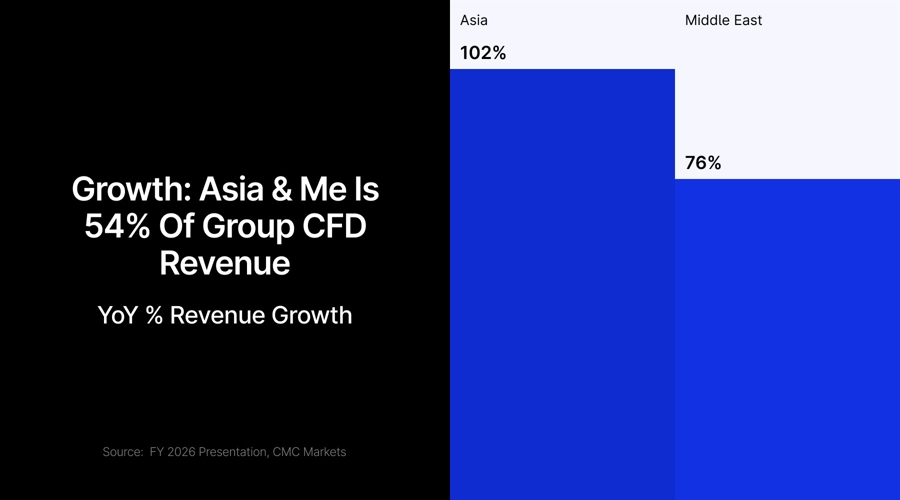
CMC Markets published in June its preliminary full-year results for the period ended 31 March 2026. The company delivered a record performance, driven by a successful institutional-first strategy, continued expansion through wholesale partnerships, and an increasingly diversified multi-asset business.
CMC reported a 15% year-on-year increase in net operating income to £392.6 million. Statutory profit before tax rose by 20% to £101.3 million, representing the company’s strongest operational performance since FY 2021, excluding the exceptional market conditions experienced during the Covid period.
This momentum has prompted the board to issue FY 2027 net operating income guidance of between £460 million and £480 million, implying expected growth of at least 17% year-on-year. Rather than focusing solely on the headline figures, it is worth looking more closely at the structural themes highlighted in the CMC’s recent presentation, which provide greater insight into the operational drivers behind these results.
B2B and API Distribution
The main driver behind CMC’s recent performance has been the rapid expansion of its business-to-business (B2B) operations. Over nearly four decades, the company has invested in building institutional-grade trading infrastructure, which it is now deploying through API connectivity to accelerate growth across multiple markets.
The effectiveness of this strategy is evident in CMC’s neobank API partnership, where account openings increased by 2,400% in less than a year. This model allows the company to expand into markets where it has little or no direct physical or marketing presence, with 70% of these new accounts originating from markets where CMC previously had no meaningful presence.
The Capital Flywheel: Funding Retail Growth
Importantly, CMC is using the scale of its institutional business to support a renewed expansion of its retail operations. As stated in the broker’s presentation, the company is using revenue generated from its wholesale business to fund its direct-to-consumer (D2C) strategy.
Rather than relying on expensive digital marketing campaigns to acquire retail clients, CMC has built a capital allocation strategy around four key operational pillars.
Read the full analysis with all the data and insights on the FM Intelligence Portal.
This article was written by Sylwester Majewski at www.financemagnates.com.BrokersRead More
You might also be interested in reading Gaming giant Konami increases staff for Web 3.0, metaverse and NFT marketplace expansion.