


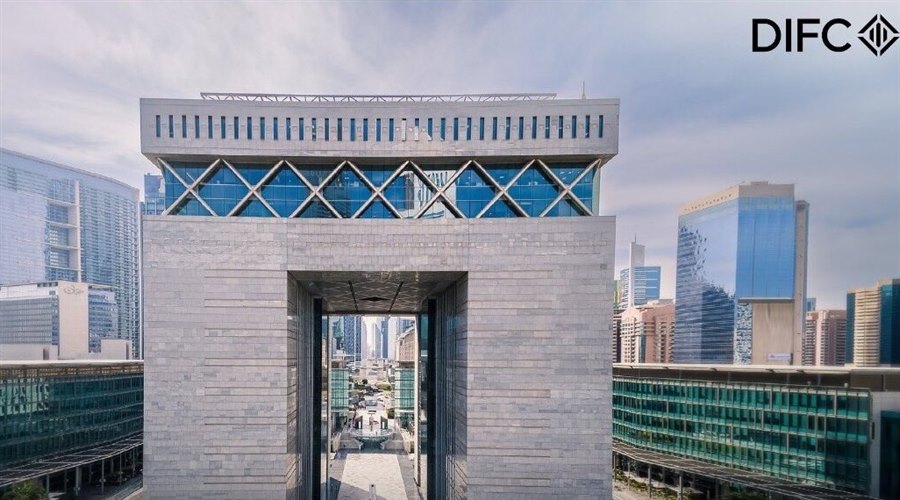
Dubai’s main financial free zone handled $13 trillion in over-the-counter transactions in the fourth quarter of 2025, more than double the value and volume of a year earlier.
Most of that growth came from derivatives, with the activity concentrated in foreign exchange and interest rates, the Dubai Financial Services Authority said in its annual report published Thursday.
The OTC figure is the standout data point for trading firms, though the regulator chose to lead its announcement with registration growth and a jump in Dubai’s global ranking.
The DIFC licensed 182 new firms in 2025, a 16% increase that brought the total to 1,050 regulated entities, and Dubai climbed to seventh in the Global Financial Centres Index published in March, up from 11th.
The registration pace follows the rollout of DFSA Connect, a digital authorization platform that coincided with an 18% rise in applications.
FX and Rates Drive a Doubling in OTC Flows
The DFSA tied the OTC growth to a wider pool of participant firms and rising client demand, alongside Dubai’s position connecting trading windows across Asia, Europe and the Americas.
The report noted that recent OTC growth has sat largely in derivatives, with a concentration in foreign exchange and interest rate products.
That mix reflects the institutional broking and dealing activity migrating to the centre. TP ICAP tripled its Dubai footprint last year, citing the DIFC as a bridge between Asian markets and the MENA region, and operating as a Category 3A firm under DFSA rules.
Banking told a similar story of scale. Combined balance sheets of DIFC banks reached $251 billion at year-end, up 19% on the year, according to the report.
The report is the first annual filing under Chief Executive Mark Steward, the former FCA enforcement director who took over in May.
“This momentum has continued into 2026 against a backdrop of ongoing global uncertainty,” Steward said.
Brokers and Liquidity Providers Keep Choosing Dubai
The firms arriving in 2025 cut across retail brokerage, prime services and payments. Retail FX and CFD broker Fortrade picked up a DIFC license in November, while institutional liquidity provider B2PRIME secured DFSA authorization in August through its B2B Prime Services MENA unit, with an endorsement to hold client assets.
Part of the draw is leverage. The DFSA permits up to 50:1 on major currency pairs for retail clients, against 30:1 caps in the European Union and the United Kingdom, which has made DIFC entities a distribution route for firms serving customers across the region.
Capital.com reported that more than half of its first-half 2025 volume, around $800 billion, came from MENA.
Asset managers added to the inflow. DIFC said it now ranks as a top-five global hub for hedge funds, with the number registered doubling to 87, a trend tracked across the Gulf as managers weigh full funds against representative offices.
The report put assets under management across the 321-firm wealth and asset management sector at $176 billion, a figure the regulator attributes to the whole sector rather than to the 121 fund managers alone, a distinction the press release does not draw.
Scam Alerts Climb 69% as Growth Brings New Risks
The expansion carried a heavier supervisory load. The DFSA issued 49 consumer alerts in 2025, up 69% from 29 a year earlier, and fielded 705 complaints, a 5% increase. More than half concerned firms, individuals or scams outside its jurisdiction.
Enforcement worked on 17 investigations and concluded seven, but took action against only one individual. One focus was so-called bait-and-switch activity, in which DIFC-based firms referred investors to related firms in poorly regulated jurisdictions.
The pattern echoes a recent DFSA ban on a former SVS Securities chief executive who had taken up a role at a DIFC firm despite an earlier UK prohibition.
Cyber risk also rose with the activity. The DFSA recorded a 91% increase in notifications of cyber-related incidents and a 153% increase in cyber risk breaches identified through targeted assessments.
“We try to encourage firms to look forward and be proactive,” Enforcement Managing Director Alan Linning said in the report.
Crypto Rules Shift Suitability Onto Firms
Updated crypto token rules were finalized in December and took effect in January 2026. The changes move responsibility for assessing whether individual tokens are suitable onto authorized firms themselves, supported by added governance and disclosure requirements, the regulator said.
The DFSA also recognized three stablecoins for use in financial services during 2025: Circle’s USDC and EURC, and Ripple’s RLUSD.
This article was written by Damian Chmiel at www.financemagnates.com.RegulationRead More
You might also be interested in reading Brazil’s central bank president endorses crypto regulation.