

Securitize said yesterday (Monday) that the assets it has tokenized averaged a record $5.0 billion in the third quarter. The figure was up 39% year over year.
In its first results as a listed company, it also reported a net loss of $66.3 million, compared with a profit of $4.1 million in the third quarter of 2025.
The numbers came days after Ondo Finance claimed the title of largest tokenization platform. Data from tracker RWA.xyz put Ondo at $4.04 billion and Securitize at $3.81 billion by Monday, a gap that opened as Securitize’s figure contracted.
The two counts measure different things. Securitize’s own metric covers every fund and equity it has tokenized, and stood at $4.8 billion on September 30, up 9% year over year and below the quarterly average.
London’s trading industry is coming home!
One BlackRock Fund Moves the Ranking
Both firms lean on a single Treasury-linked product, so a few large redemptions can reorder the table. BlackRock’s BUIDL fund, tokenized by Securitize, made up about 47% of its value in the RWA.xyz count.
Its supply fell from about $2 billion on November 3 to $1.8 billion five days later. In April, when OKX accepted BUIDL as margin collateral, the fund held about $2.5 billion.
Tokenized stocks give a closer contest. Ondo issued about $302.9 million of them and Securitize $249.6 million in October 2025, FM Intelligence data show, a market pitched at the retail traders whose CFD activity FM Intelligence tracks across 186 brokers.
Ondo added shareholder voting to its tokenized US securities in July, and Securitize launched Securitize Stocks on October 8 with dividends and voting rights passed through. On each measure here, the two firms were less than $230 million apart.
Listing Charges Drive the Loss
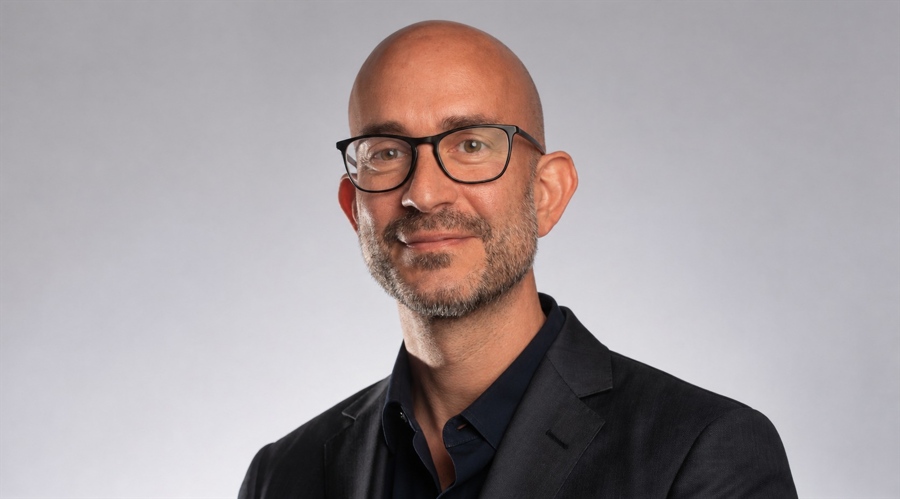
Chairman and Chief Executive Carlos Domingo pointed to new tokenized funds from BlackRock, ARK Invest and Neuberger as the source of the asset growth.
“Institutions are past the experimenting stage,” Domingo said.
Total revenue rose 13% year over year to $18.6 million, the second-highest quarter in the company’s history. Tokenization fees grew 28% to $11.5 million, while asset servicing revenue slipped 6% year over year to $7.2 million.
About $60 million of the net loss came from largely non-cash charges linked to the merger and listing, the company said. They included a $23.2 million change in the fair value of earnout liabilities and a $20.6 million loss on settling convertible instruments.
Compensation costs rose to $16.5 million from $4.4 million, mostly on $13.4 million of share-based pay.
Adjusted EBITDA, which strips out those items, was a loss of $2.0 million, compared with a profit of $3.6 million a year earlier. Securitize also cut its second-quarter transaction volume to $4.4 billion from a previously reported $5.3 billion.
Its fund services arm administered $25.2 billion at the end of September, 29% less than a year earlier, across 669 funds, a count the company described as roughly flat.
Buyback and an Asset-Backed Lending Deal
Securitize ended September with about $300 million in cash and no debt, after the merger with Cantor Equity Partners II that took it to the New York Stock Exchange in July. Its board approved a buyback of up to $50 million, open until the end of 2027.
The company also agreed to buy River One, an asset-backed financing platform incubated by Framework Ventures and backed by Maple Finance. The deal is expected to close in the fourth quarter. Terms were not disclosed.
Securitize said it plans to support trading venues set up under the Securities and Exchange Commission (SEC) Innovation Exemption granted in September, although Securitize Stocks run on its own broker-dealer and alternative trading system.
Trading remains thin across the sector: permissioned products made up 59% of tokenized asset value but 0.2% of spot trading in a Pantera Capital survey from September.
This article was written by Damian Chmiel at www.financemagnates.com.FinTechRead More
You might also be interested in reading Google’s Willow Raises Bitcoin Security Concerns as Price Struggles to Break $100K.