


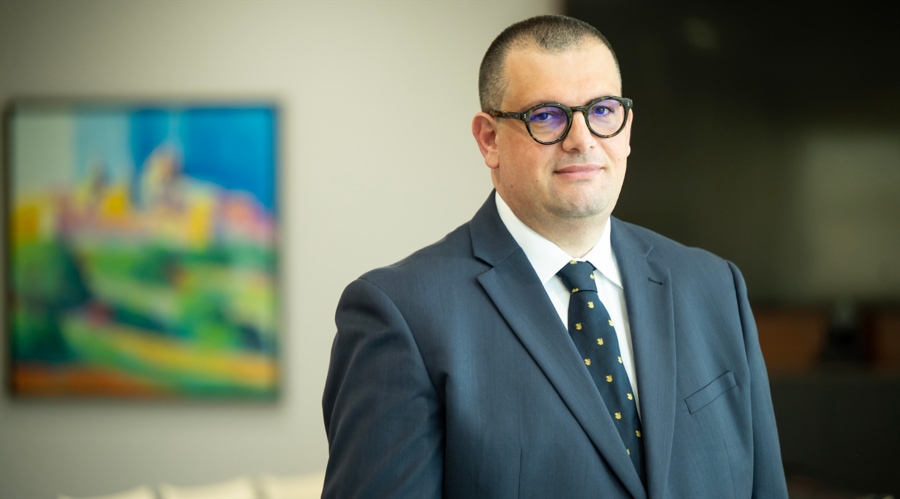
“We’re not after numbers, we’re after quality, we’re after legitimate business.” That is how Kenneth Farrugia, the Chief Executive Officer of the Malta Financial Services Authority (MFSA), sums up the jurisdiction’s approach to licensing, in an interview with Finance Magnates.
He also stressed that the regulatory officers “don’t have a social relationship,” despite Malta being a small island and the people they regulate might be next-door neighbours, while adding that perps “fall within the scope of intervention measures on CFDs,” and the regulator’s focus is on understanding that “whether, and how, prediction markets can fit within the MiFID framework.”
Farrugia has led the MFSA since April 2023, arriving from the Financial Intelligence Analysis Unit (FIAU), Malta’s anti-money laundering supervisor, where he served as director for six years. He took over an authority that had only recently worked its way off the Financial Action Task Force’s grey list of jurisdictions under increased monitoring, a listing Malta exited in June 2022 after a period the CEO now describes as “a rough patch.”
“It’s Much Easier for a Player to Be Immediately Left Out”
Malta’s reputation as a crypto hub predates MiCA by several years. Farrugia traced it back to 2017, when the government legislated for crypto assets from both an anti-money laundering angle and a licensing and conduct one, a decision he called a “huge” one for a small jurisdiction to take unilaterally, since there was no international obligation to do so at the time.
The impact was immediate and severe by design. “In 2017, we had over 200 companies operating from Malta. When we introduced the regime, only 24 applied for a VASP licence, and we only licensed half of them,” Farrugia said. The rest, he added, moved on to jurisdictions with lighter requirements.
That period, which Farrugia measures at roughly seven years of hands-on supervisory experience before MiCA came into force in 2025, shaped how Malta approached the EU-wide regime once it arrived.
Most of Malta’s MiCA licensees, he said, were companies already supervised under the earlier Virtual Financial Assets Act, among them crypto.com, OKX, Falcon X, etc. New applicants have come in, too, but the numbers stay modest: Farrugia put the total at 22 licences issued to date, placing Malta fourth among EU jurisdictions by his own count.
That ranking tracks with public data. ESMA’s interim MiCA register has shown Germany well ahead of the rest of the bloc on authorisations, with the Netherlands and France some way behind in a similar range to each other, and Malta and Cyprus further down the list.
Farrugia declined to speculate on why other jurisdictions have issued more licences, saying only that Malta’s job is to assess its own applications properly rather than compete on volume.
A European Banking Authority (EBA) review of Malta’s licensing process, he said, came back largely positive, and the MFSA has since implemented roughly 80% of the recommendations that followed, with the outstanding item, a new supervisor case management system, expected to launch “hopefully early next year.”
BREAKING: Nothing has changed in Malta, for Binance or any other crypto exchanges. No licenses were granted to anyone by Malta, as of yet.Some media, even crypto media, has such a bad habit of releasing misleading news that only hurts their own credibility and our industry. https://t.co/C9MdCngx70
— CZ 🔶 BNB (@cz_binance) February 21, 2020
Perps “Should Meet the CFD Definition”
The same gatekeeping logic extends to how Malta treats perpetual futures, a product increasingly offered by crypto exchanges. Farrugia said Malta’s position is that “derivatives marketed as perpetual futures should fall within the scope of the existing conduct and intervention measures on CFDs.“
Asked directly whether that means firms such as OKX or crypto.com would need to treat perpetual futures as CFDs, and take on the accompanying MiFID and product-intervention obligations, he confirmed: “Yes. But they should meet the CFD definition.”
His view aligned with the stance of ESMA. The pan-European regulator recently issued a notice stating that crypto perps may be classified as CFDs rather than general derivatives under MiFID II. A CFD classification means that the leverage offered for perps will be heavily limited, with strict rules governing their marketing to retail clients.
“All licence holders are obliged to assess their products, determine whether they fall within the relevant definitions, and ensure they meet all applicable requirements,” the MFSA CEO added. “If a product does not fall within that definition, it is outside the scope of those measures.”
Read more: Perps Hit $61.7 Trillion – What Brokers Need to Know Before Adding Crypto’s Hottest Derivative
“Preventing Bad Actors from Entering the Jurisdiction”
The MFSA is one of the many national competent authorities (NCAs) in Europe. Although its collaboration with other regulators in the bloc is clear, the oversight, now, appears to be shifting towards offshore, too.
The Maltese regulator has been active on this front recently: it signed a memorandum of understanding with the Seychelles Financial Services Authority in April to formalise cooperation on broader financial oversight. It is one of several such agreements, Farrugia said Malta maintains both within and outside the EU.
He pointed to a growing web of such bilateral arrangements with regulators beyond Malta’s borders, describing information sharing as often voluntary rather than triggered only by formal requests.
“This helps prevent bad actors from entering the jurisdiction,” Farrugia said. “If we take action against a bad actor operating in Malta and find that the same operator or individual is active in another jurisdiction, whether within the EU or elsewhere, we immediately alert the relevant regulator so they can take any necessary action.”
“We Don’t Have a Social Relationship”
Behind that approach sits a regulator that has scaled up considerably.
The MFSA employs more than 600 people, part of a wider Maltese financial supervisory ecosystem that includes the FIAU, the Malta Business Registry, and the Central Bank of Malta.
Around 25 staff work specifically across crypto-related functions, and enforcement, Farrugia said, is built around remediation rather than fines alone: firms found in breach are required to demonstrate that corrective action has actually taken hold before the matter is considered closed.
Asked how a regulator polices an industry on an island of roughly 600,000 people, where a compliance officer might have a licensee company’s head as the next-door neighbour, Farrugia pushed back on the framing. “We don’t have a social relationship, let’s put it that way,” he said, describing the dynamic instead as a professional one built on regular engagement, consultation forums, and clear expectations. “Either you’re serious, you’re up to scratch, or otherwise you just close shop and move to wherever you want.”
Another interesting read: CySEC Chair on Crypto Perps, Prediction Markets and the High-Wire Act of EU Regulation
“It’s Not a Wait-and-See Situation”
While Malta has already established itself in the crypto space, it is now attracting a different set of companies: prediction markets.
Malta’s government has floated the sector as a potential growth area, but Farrugia was careful to separate enthusiasm from regulatory clarity. Event contracts, he said, could fall under financial services rules, gambling rules, or both, depending on how a given product is classified, and the MFSA is working alongside the Malta Gaming Authority to figure out where the lines sit.
His approach to this specific market is also aligned with ESMA’s view, which recently said that event contracts might be classified as banned binary options, gambling products, or even fall under MiCA, depending on their nature.
Related: Malta Tried This with Crypto. Now It’s Trying Again with Prediction Markets
Asked whether Malta was now in a wait-and-see posture, unlike its early, unilateral move on crypto in 2017, Farrugia rejected the comparison: unlike VFAs at the time, prediction markets already have functioning frameworks elsewhere to study, including in the United States.
The practical friction, as Farrugia described it, sits less with MiFID, where passporting already smooths cross-border access, and more with gambling licences, which currently have no equivalent passporting mechanism across the EU. A prediction market firm looking to enter Europe could, in theory, need separate approvals covering MiCA, MiFID, and gambling law, depending on how its products are classified, a point Farrugia acknowledged without offering a timeline for resolution.
He said Malta has never taken a position at odds with ESMA and intends to keep it that way once the regulator’s own recent statement on the classification of event contracts is fully worked through.
“At this stage, we do not have a timeline,” the MFSA Chief continued on the regulatory decisions around prediction markets. “Our focus is on understanding whether, and how, prediction markets can fit within the MiFID framework. This work is ongoing, and it is not limited to Malta. Other jurisdictions are carrying out similar assessments. Once we have reached a position, following discussions with ESMA, we will communicate our approach.”
AI Is “An Opportunity” Rather than a Threat, for Regulators
AI drew a similarly cautious but engaged response. Asked about MCP integrations connecting trading platforms to consumer-facing AI agents, and whether that falls within existing conduct rules, Farrugia framed AI broadly as “an opportunity” rather than a threat, for regulators and licence holders alike.
The MFSA has issued a ‘Dear CEO’ letter setting out expectations for AI use among its licence holders, which Farrugia said made Malta one of the first jurisdictions to do so, and the authority is building an internal AI function as part of a wider restructuring. Crucially, he said those expectations extend beyond what a licensed firm builds itself to the third-party providers, including general-purpose LLMs, that feed into its operations.
“We see AI not just as a technological development but also as a governance issue,” the Maltese regulatory head added. “There are many discussions taking place about how AI can be used responsibly and how its benefits can be realised. However, this must happen within a strong governance framework supported by clear controls and oversight.”
“One of our priorities is the implementation of our Supervisory Case Management System. This is an important foundation because, without a structured case management system, it is difficult to obtain the full benefits of AI.”
Read more: AI Trading Doesn’t Need New Rules. It Needs Better Governance.
On agentic trading specifically, Farrugia called the space “still at an infancy stage,” with more detailed rules likely to develop over time rather than arrive as a single finished framework.
Meanwhile, more and more brokers and prop firms have been launching MCP server access, opening their platforms to AI assistants. Some are even allowing trade executions directly from AI assistants.
“We’re Open for a Legitimate and Quality Business”
Malta is a small island nation in the Mediterranean. Yet it has made a name for itself in the financial services industry.
Talent, not capital, is what he identified as Malta’s defining constraint and its main asset. With no natural resources to speak of, he pointed to sustained investment in education, including a University of Malta master’s degree in financial regulation and compliance and an in-house Financial Services Academy, alongside a Highly Qualified Persons regime designed to pull in specialists from abroad. More than a fifth of MFSA staff are foreign nationals, drawn from within the EU as well as the US and Africa, a mix Farrugia credited partly to English being one of Malta’s official languages and to an education system modelled on the UK’s.
Asked what he wanted to add before wrapping up, Farrugia returned to the theme he had opened with. Malta, he said, had learned its lesson from the grey-listing period and was not interested in maximising licence counts across crypto, funds, or fintech more broadly. “We’re open for business,” he said, “but we’re open for a legitimate and quality business.”
This article was written by Arnab Shome, Adonis Adoni at www.financemagnates.com.InterviewsRead More
You might also be interested in reading Buy uniform early and save now for trips: how to save money before school starts in the UK.