


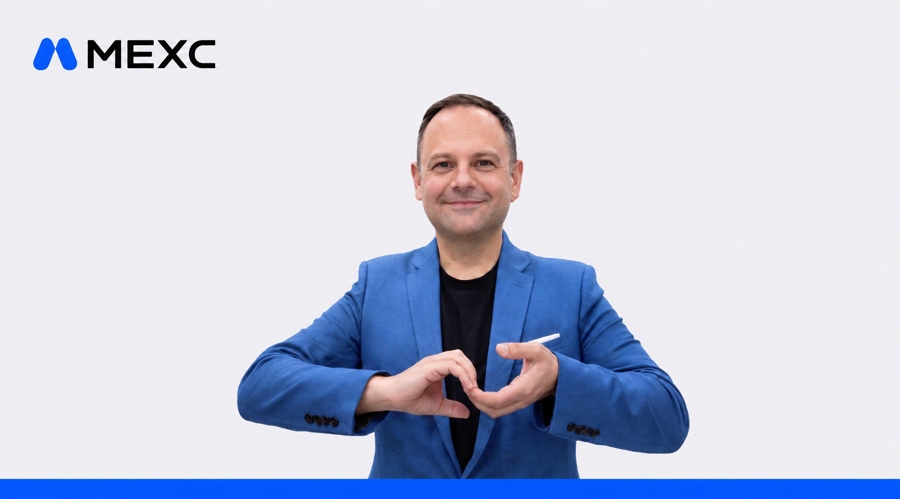
“We have to make trust verifiable,” Robert MacDonald told FinanceMagnates.com.
That is the standard the former Bybit compliance chief now inherits at MEXC, which named him its chief compliance officer today (Wednesday) as it pushes deeper into equities and other regulated products.
MacDonald will run the exchange’s global compliance strategy, governance framework and dealings with regulators, the company said.
His arrival coincides with a broader shift at the venue, which has moved well beyond spot crypto into tokenized stocks, exchange-traded funds and initial public offering access, a move that pulls MEXC closer to securities rules it has largely operated outside.
A Compliance Chief Moves From Bybit to MEXC
MacDonald joins from Bybit, where he served as chief legal and compliance officer from 2024, directing the exchange’s global licensing work and the rollout of anti-money-laundering and know-your-customer programs, the company said. His earlier roles included senior compliance posts at Standard Chartered and Binance, where he focused on sanctions and regulatory strategy.
His time at Bybit also spanned the February 2025 breach that drained roughly $1.4 billion in ether, the largest theft in crypto history. In 2025 he was named among Asian Legal Business’s top 15 chief compliance officers, according to the trade publication.
Crypto Exchanges Race to Staff Up Compliance
The hire fits a wider pattern of exchanges building out compliance teams as regulators tighten scrutiny of digital assets and the multi-asset products these venues now sell.
OKX in May appointed former Pepperstone UK chief executive Iain Rogers as its head of compliance for Europe, the Middle East and Africa, adding a traditional brokerage executive to its regulatory bench. MacDonald steps into a comparable brief at MEXC, only with a global remit rather than a regional one.
Bitget went a similar route last year, bringing in former Binance lawyer Hon Ng as chief legal officer and telling FinanceMagnates.com it wanted growth and tighter controls to advance together. Both OKX and Bitget have pursued European licensing.
MEXC entered July without a MiCA license and without a public update on any application, its published list of restricted jurisdictions still leaving out EU member states as of a May review.
Multi-Asset Expansion Puts Securities Rules in Play
MEXC has spent the past year adding products that look more like a brokerage than a crypto exchange.
It sells USDT-settled stock futures with leverage, and in June launched real U.S. share trading under its RealStocks brand, moving past the tokenized-equity format that dominated the sector. Each step raises the question of when one of these products counts as a security, and where.
In comments to FinanceMagnates.com, MacDonald was blunt about the limits of a one-size approach. “A single detailed rulebook would break down quickly across 170 markets,” he said.
The workable model, he added, is a common group standard for core controls paired with local rules that decide what customers can actually access, so product access, leverage and disclosures shift by market.
He put as much weight on execution as on legal analysis. “A legal conclusion is useless if the platform cannot apply it,” he said. MEXC would keep local permissions under review, he added, and “withdraw access where the legal basis is unclear.”
MEXC chief executive Vugar Usi framed the hire around that convergence, saying “innovation and compliance can no longer be treated as separate priorities.”
Security Claims
MacDonald’s broader pitch is that faith is no longer enough: “exchanges can no longer ask users or regulators to simply trust them,” he told FinanceMagnates.com. He called instead for more regular, independently verified disclosures, and for compliance to be built into products from the start.
He said MEXC had expanded its Guardian Fund by 1,000 bitcoin, deepened work with security firm Hacken, and that its systems intercepted threats involving $191 million in user assets and protected 1.92 million users between January 2025 and the first quarter of 2026.
MacDonald himself set a higher bar: “trust is not built through a single fund, audit or announcement,” he said.
The exchange, however, carries a longer regulatory shadow. Hong Kong’s Securities and Futures Commission placed MEXC on a warning list over unlicensed activity in 2024, and that alert still stands.
This article was written by Damian Chmiel at www.financemagnates.com.Executive MovesRead More
You might also be interested in reading Crypto Majors BTC, ETH, XRP Little Changed as HBO Calls Peter Todd the Bitcoin Creator.