


The year 2018 marked a regulatory watershed for the European Contracts for Differences (CFD) industry. Under its product intervention powers, the European Securities and Markets Authority (ESMA) implemented a sweeping package of restrictions aimed at curbing retail investor losses across the European Union. This mandate altered the risk dynamic of retail trading by targeting the core structural features of these complex financial products.
2018 Regulatory Framework
The 2018 regulatory package restructured the retail trading landscape, replacing aggressive marketing and unchecked risks with tight institutional boundaries. Prior to these interventions, the retail CFD sector operated with minimal guardrails, often leaving under-informed traders exposed to catastrophic financial downside. Recognizing a systemic market failure driven by retail losses, ESMA and regional watchdogs stepped in to codify a mandatory baseline of consumer protection. This intervention shifted the operational burden of extreme market anomalies away from retail clients and onto brokerage firms.
Exploitation of NBP Asymmetry
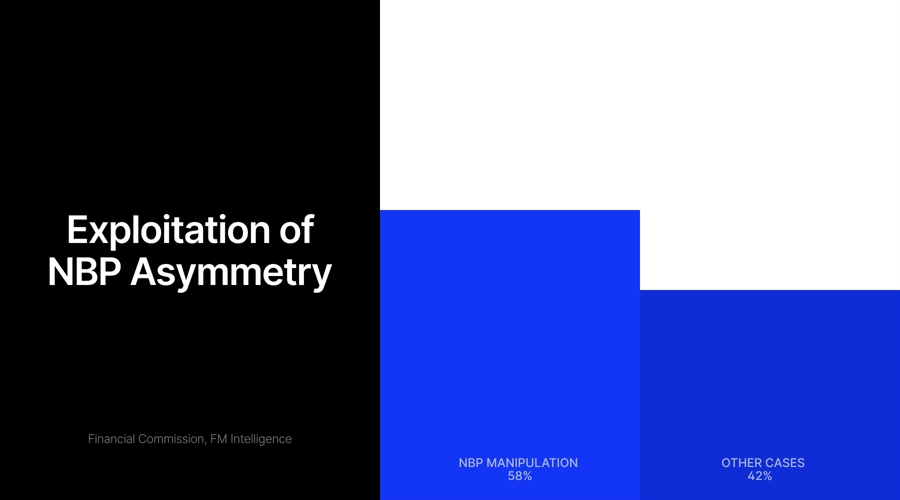
In 2025, the Financial Commission blacklisted 87 individuals, representing nearly 6% of all filed complaints, due to verified and intentional misconduct.
The primary driver behind these penalties was the manipulation of Negative Balance Protection (NBP), which accounted for about 50 cases (nearly 58% of the banned traders). In these instances, individuals utilized extreme leverage just before major economic announcements to capture massive gains if the market moved in their favor, while relying on NBP to wipe away their debts if the trade failed.
Read the full article on the FM Intelligence portal to uncover all insights and data.
This article was written by Sylwester Majewski at www.financemagnates.com.RegulationRead More
You might also be interested in reading HashKey Capital Singapore Secures Capital Markets Services License From MAS.