

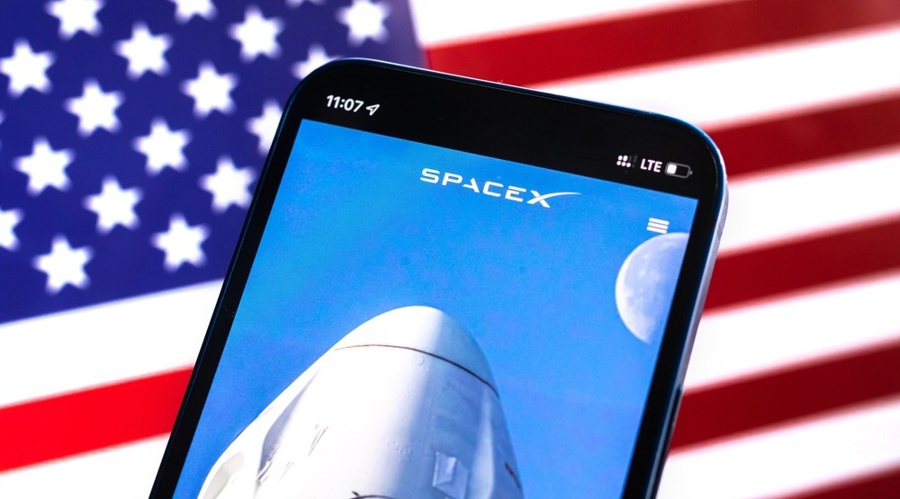
SpaceX prices its initial public offering (IPO) after Thursday’s close and starts trading Friday on Nasdaq, and the size of the deal is already moving everything around it.
The company is selling 555.6 million shares at a fixed $135, raising about $75 billion at a valuation near $1.8 trillion. That would be the largest listing on record, and to buy it, someone has to sell something else.
The $50 Billion Rotation Out of Everything Else
The math is blunt. A $75 billion offering has to be funded with $75 billion in cash, and most of that cash currently sits inside other stocks.
The pull is already visible. Eric Chia, Financial Markets Analyst at Exness, framed the debut as an event built for movement and told clients to brace for the swings once it lists. “The question is not whether SpaceX will move violently. It will,” he said.
Other analysts estimate investors could sell around $50 billion of other holdings to fund SPCX, with the heaviest pressure coming from the 30% retail carve-out and from passive funds.
The Nasdaq fell 4.2% on June 7 in a broad selloff that also dragged down bonds, gold and crypto.
BNP Paribas told clients the deal could force a wave of selling in semiconductors, the chip names that have led the AI rally. Strategist Greg Boutle said the volatility would land alongside the largest market value ever seen in a US listing.
Kathleen Brooks, research director at XTB, put the rotation plainly, saying “investors may need to sell other tech names to make room for SpaceX.” She tied that to this week’s swings, with the VIX fear gauge up about 24% in five sessions.
Why This Listing Hits Harder Than Aramco
Mega-IPOs always bring volatility. What sets this one apart is scale, since the deal would more than double Saudi Aramco’s 2019 record and value SpaceX at a level few public companies have ever touched.
Index mechanics add to the pressure. Nasdaq’s new fast-entry rule could fold SpaceX into the Nasdaq 100 within 15 trading days, forcing the funds that track the benchmark to buy it and trim existing members to make room.
The deal also lands in a crowded pipeline. OpenAI filed confidentially for a listing this week and Anthropic did the same last week, and Bloomberg calculates the three could add about $3.6 trillion of market value to US exchanges.
That supply is meeting fresh AI-bubble nerves, the same worry that recently pushed one prime broker to pull its listing after a 40% valuation cut.
SpaceX IPO info https://t.co/mSsriwGoWo
— Elon Musk (@elonmusk) June 4, 2026
Demand Runs More Than Four Times Past Supply
For all the selling, the book is crowded. Orders ran more than four times the shares on offer, according to people familiar with the deal, before banks closed institutional demand on Wednesday.
Goldman Sachs, Morgan Stanley, Bank of America, Citigroup and JPMorgan are leading the offering, with 18 other banks involved. Musk reserved 30% of the stock for retail, triple the usual slice.
The loudest enthusiasm is retail. Bloomberg reported buyers borrowing money to get in, including a public relations manager, Anna Watts, who saved $6,500, tried to borrow more, and said “The more, the better.”
Another would-be buyer, marketing executive Bryan Mitchell, said “I’m willing to overpay for it just to say I’m part of the thing.” That kind of demand is what underwriters are now trying to ration through lotteries and pro-rata fills, so an order does not guarantee a fill.
Brokers, Exchanges and Prop Firms Race to Sell the Deal
The scramble to put SpaceX in front of small investors has split into three very different trades, and the route a buyer takes decides what they actually own.
The first is a real allocation at the $135 price, offered in the US through Robinhood, Fidelity, Charles Schwab, SoFi and E*Trade, and to UK residents through Interactive Brokers.
The second is a tokenized claim, with Kraken and Bybit issuing share-backed tokens through the xStocks framework for buyers outside the US, UK, Canada and Australia.
The third holds no stock at all. Binance, OKX, Gate, BingX and Hyperliquid have listed pre-IPO perpetual futures, and CMC Markets opened a grey market in spread bets and CFDs on the same day Binance went live.
PU Prime added a pre-IPO CFD in late May, while Bitget sold a preSPAX token back in April.
Even the prop sector has joined. The Trading Pit became the first funded-account firm to tie a product to the listing, offering simulated SPCX positions of up to $50,000 on a 70% profit split.
MEXC went the other way, routing orders for real US shares through a licensed broker.
The Skeptics Sitting It Out
Not everyone is chasing it. SpaceX posted 2025 revenue of $18.67 billion and a net loss of $4.94 billion, a top line close to what Dollar Tree or AutoZone bring in, while its xAI arm burns through about $1 billion a month.
At about $1.8 trillion, the stock is priced near 56 times forward revenue, with much of the case resting on forecasts that run years out. Goldman’s prospectus models $474 billion of revenue by 2030, most of it from an AI business that barely exists yet.
Van Ha Trinh, a Financial Markets Analyst at Exness, made the same point reading the filing, arguing the company is “priced as though it has already won a war it has not yet entered.”
XTB’s own client research found muted interest across 14 European and Asian branches, with enquiries in the low hundreds and some Slovak clients asking only when they could short the stock.
Brooks said “our clients are showing some healthy skepticism of Elon Musk’s ambitions.”
Morningstar’s Nicolas Owens, who rates the company overvalued, wrote that “investors will have opportunities to buy the stock at more attractive levels…” once it trades.
The tokenized route carries its own caveats, and earlier SpaceX tokens already drew scrutiny from European regulators. The prospectus also leaves Musk with about 85.1% of the vote through super-voting shares, so public holders get little say.
Whether the crowding-out reverses will not be clear until SPCX prints. For now, the largest IPO ever is making the rest of the market clear space for it.
This article was written by Damian Chmiel at www.financemagnates.com.TrendingRead More
You might also be interested in reading Cardano Founder And ETH Dev Get Into A Tussle of Word On Twitter.