


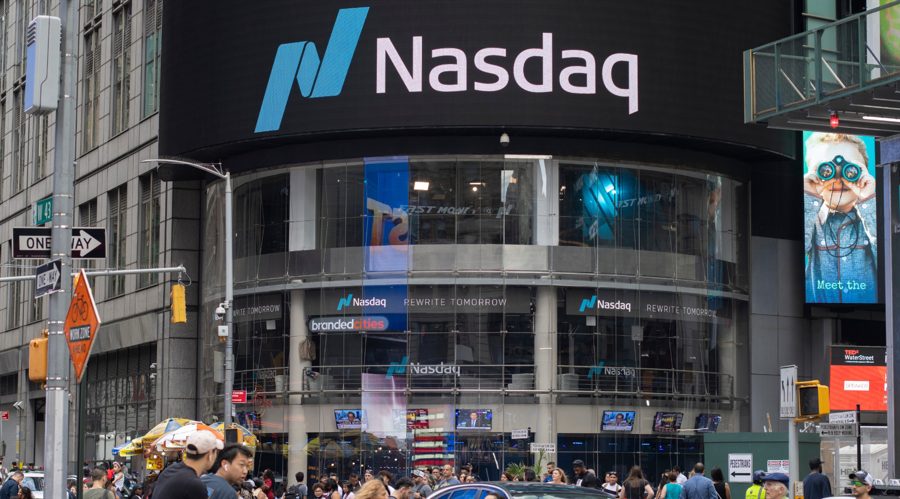
Nasdaq has filed a request with the U.S. Securities and Exchange Commission (SEC) to list binary options tied to the Nasdaq‑100 index and its smaller micro version.
Nasdaq’s filing follows Cboe’s similar plans to offer prediction‑style derivatives. Both exchanges are responding to investor demand for simplified ways to speculate on short‑term market movements. The move would allow traders to make yes‑or‑no bets on the index’s direction, expanding event‑style trading into U.S. equity markets.
Demand Grows for Event-Based Trading
Under the proposal, each contract would be priced between one cent and one dollar and pay a fixed amount if the condition is met, expiring worthless otherwise.
The structure resembles prediction‑market contracts used on crypto platforms such as Polymarket and Kalshi, where prices reflect the perceived odds of an event. While prediction‑market platforms are regulated by the Commodity Futures Trading Commission, Nasdaq’s binary options would be subject to SEC oversight.
Crypto companies are also advancing into the space. Coinbase has launched prediction markets for political and economic events, and Gemini received CFTC approval in December to operate as a designated contract market for event‑based trading.
Joining Cboe, Coinbase, and Gemini
Cboe Global Markets is also moving into this space with its own version of all‑or‑nothing, yes‑or‑no style contracts that closely resemble prediction‑market bets on events. The exchange is exploring a regulated options product that offers fixed, all‑or‑none payouts, positioning it to compete with fast‑growing prediction platforms.
LATEST: ⚡ Cboe is developing binary options with all-or-none payouts on yes-or-no event contracts to compete with prediction platforms like Polymarket and Kalshi, according to the Wall Street Journal. pic.twitter.com/NKJPqpAVM6
— CoinMarketCap (@CoinMarketCap) February 2, 2026
Bloomberg has similarly reported that Cboe plans to roll out options that enable binary wagers on event outcomes as part of a broader push into prediction markets, using SEC‑regulated listed contracts rather than the lightly supervised or offshore structures common in crypto‑based platforms.
This article was written by Jared Kirui at www.financemagnates.com.CryptoCurrencyRead More
You might also be interested in reading China’s artificial intelligence boom might help mitigate some tariff pain.