

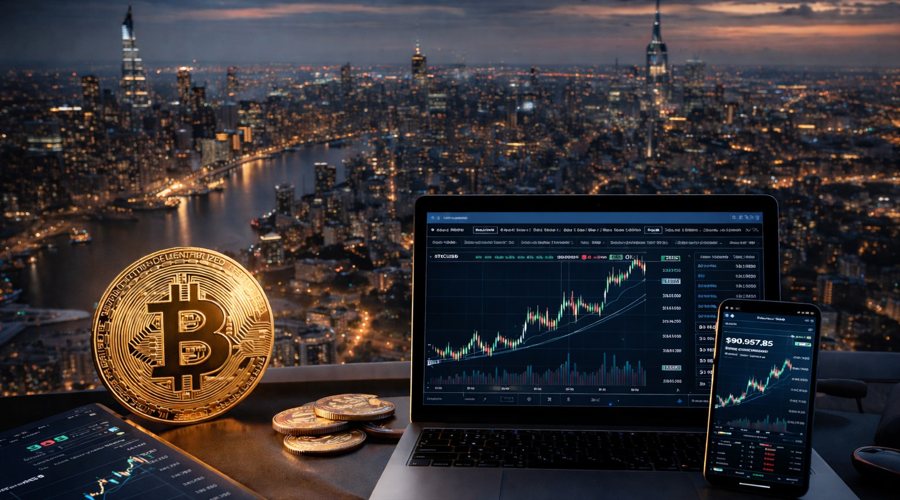
The crypto market staged a surprise rally of more than $100 billion following the U.S. military operation in Venezuela. With traditional financial markets closed at the time, digital assets became the primary venue where global risk was repriced in real time.
The episode provided a rare, real-world stress test for the crypto market and delivered a clear signal to traditional brokers: the transition to genuinely 24/7 trading is no longer a competitive differentiator, but an operational requirement.
While many analysts expected a classic flight to safety amid heightened geopolitical tension in Latin America, the market reacted in the opposite direction. Bitcoin surged past $90,000, while short liquidations exceeded $130 million within the first 12 hours after the events unfolded.
BREAKING:🇺🇸 US is attacking Venezuela.And it’s happening exactly when crypto is trying to recover.F*cking tired of this shit now.
— Ash Crypto (@AshCrypto) January 3, 2026
Timing was a decisive factor. The military operation took place while traditional markets were shut. As news broke and investors sought to reassess global risk exposure, cryptocurrency markets were effectively the only venue available for immediate capital reallocation.
In that moment, crypto functioned less as a speculative asset class and more as an always-on liquidity layer during a major geopolitical shock.
Sputnik Moment for Brokers
For the brokerage industry, the implications are significant, as the episode exposed how geopolitical risk can be repriced entirely outside traditional trading hours.
The End of “Off-Hours.” Geopolitical risk does not follow a Monday-to-Friday schedule. For brokers offering crypto alongside traditional assets, risk and liquidity management can no longer pause over weekends or holidays.
24/7 Infrastructure Under Strain. Crypto-native exchanges, OTC desks and market makers saw a sharp surge in activity, highlighting the operational stress placed on platforms when they become the market of last resort.
A New Risk Model for TradFi. Banks, custodians and multi-asset brokers integrating crypto must update their risk frameworks to account for scenarios in which major geopolitical events occur outside traditional trading hours, triggering large and potentially one-sided flows into or out of digital assets.
The rally also produced irrational side effects that underscored the market’s unique dynamics. The token of Convex Finance (CVX) jumped more than 40% simply because its ticker matched that of oil major Chevron (CVX), which some traders believed could benefit from the political developments.
Ultimately, the Venezuela crisis highlighted crypto’s role as a global, continuously open liquidity layer. For the traditional brokerage world, it served as a clear wake-up call: markets no longer sleep, and the risks of a 24/7 trading environment can no longer be treated as peripheral.
This article was written by Tanya Chepkova at www.financemagnates.com.CryptoCurrencyRead More
You might also be interested in reading Terra Release Rebirth Date, Gets Support from Major Exchange.